CHOICE Food Explorers: Inspiring the Next Generation to Make Climate-Conscious Food Choices
Where does our food come from? How do our everyday food choices affect the planet? And what can we do to reduce food waste?
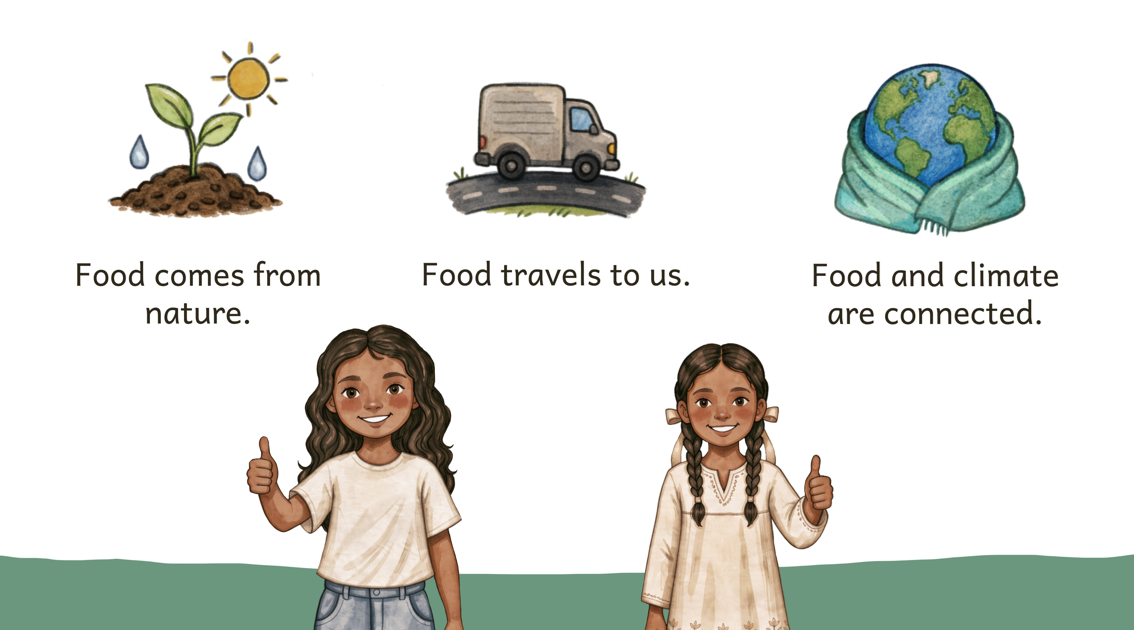
These are some of the questions that children can explore through CHOICE Food Explorers, a new educational course series developed within the EU-funded CHOICE project. Designed for children aged 8–12, the three interactive courses introduce young learners to the connections between food, climate change and sustainability through storytelling, colourful illustrations and hands-on activities.
Developed by project partners INOSENS and the Sustainable Development Solutions Network (SDSN), the courses aim to make environmental education engaging, accessible and relevant to children’s everyday lives, helping them understand how even small choices can contribute to a more sustainable future.
From Discovery to Action: Three Courses, One Learning Journey
CHOICE Food Explorers follows a simple learning journey: Discover, Choose and Act.
Each course introduces a different aspect of sustainable food systems, connecting classroom learning with real-world experiences from the five CHOICE pilot countries: Spain, Colombia, Austria, Greece and South Africa.
Developed by project partners INOSENS and the Sustainable Development Solutions Network (SDSN), the courses aim to make environmental education engaging, accessible and relevant to children’s everyday lives, helping them understand how even small choices can contribute to a more sustainable future.
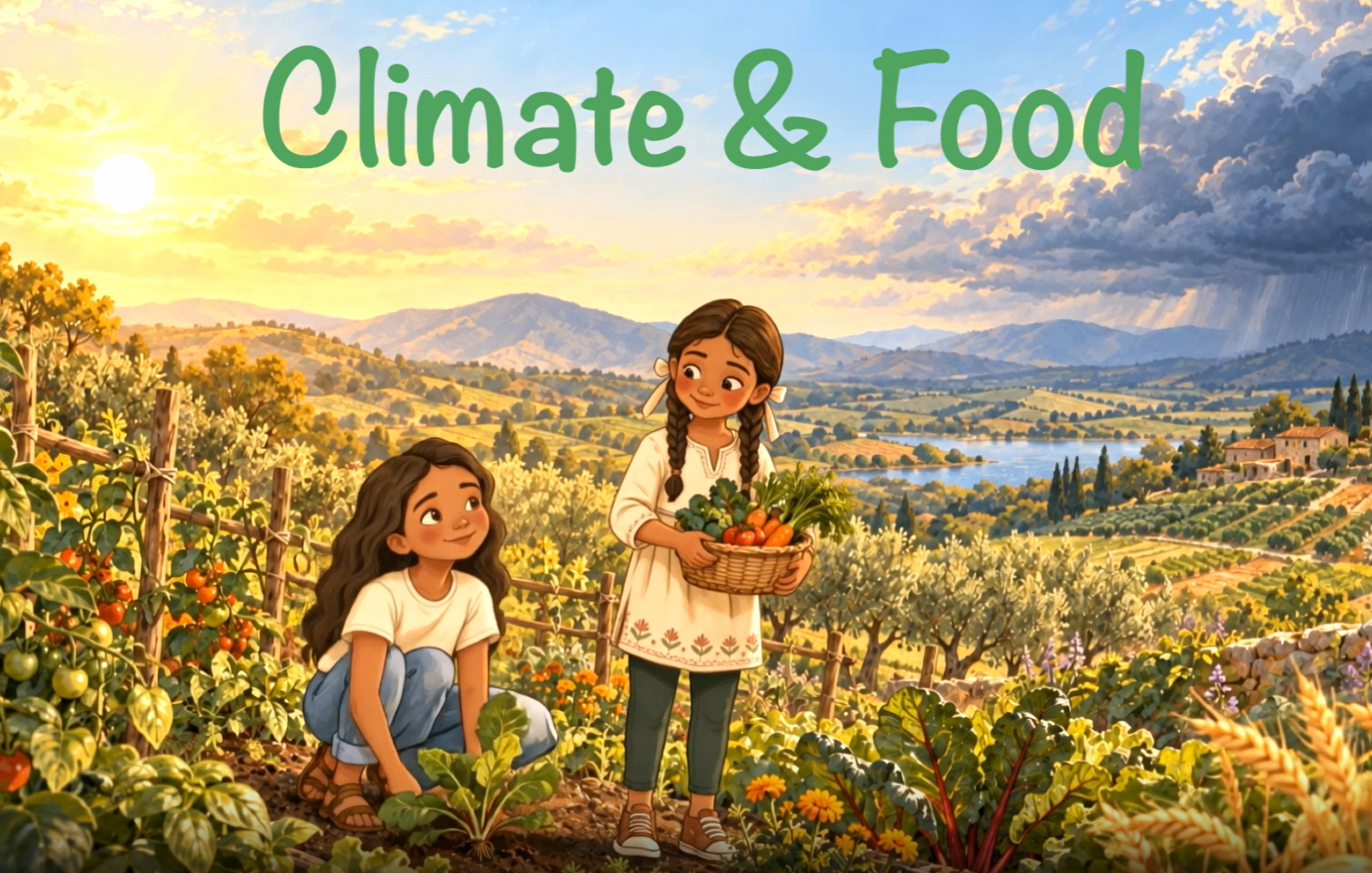
Course 1: Where Does Our Food Come From? – Discovering the Connection Between Food and Climate
Every meal has a story, and that story begins long before food reaches our plates.
Guided by Lucía from Spain and Valentina from Colombia, children discover where their food comes from and how farming, nature and climate are interconnected.
Through stories inspired by CHOICE pilot activities, they learn how olive and livestock farmers in Andalusia are exploring sustainable practices to protect soil and conserve water. They also meet the world of women coffee growers in Colombia’s Cauca region, where practices such as growing coffee under shade trees and using coffee husks as natural fertiliser can support more sustainable production.
With activities that encourage curiosity and exploration, children begin to understand the journey of food from farms to their plates and why protecting natural resources matters.
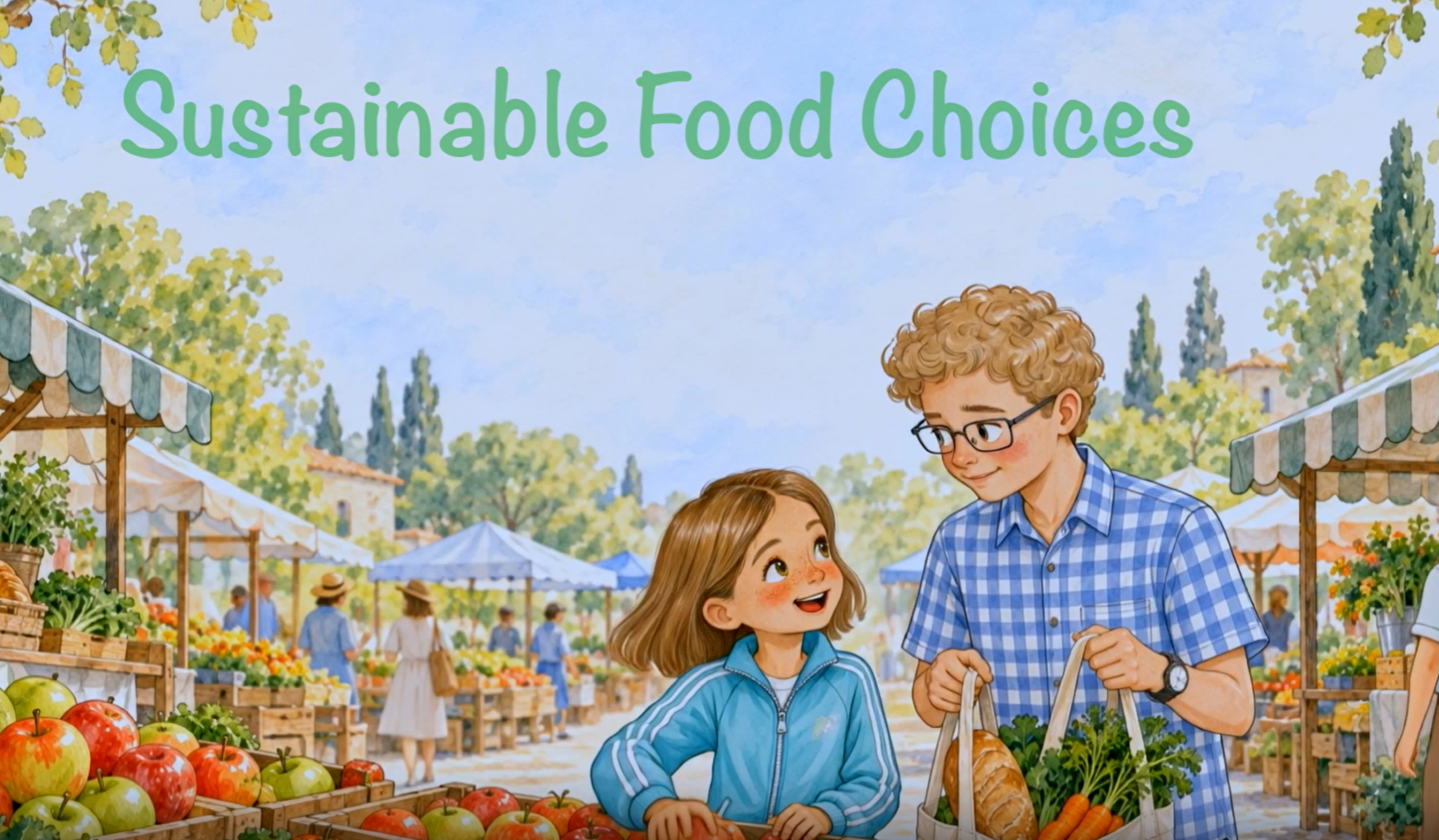
Course 2: How Can We Choose Food Well? – Making Sustainable Food Choices
What makes a food choice good for both people and the planet?
In the second course, Leon from Austria and Eleni from Greece guide children through the world of healthy and sustainable eating.
Building on CHOICE pilot activities focused on sustainable food consumption, the course encourages children to explore seasonal and local foods, discover plant-based options and understand how food labels can help communicate environmental impacts.
Through playful activities such as creating a colourful plate and exploring food choices in a classroom market, children learn that choosing food is not only about taste but can also involve considering health, the environment and available resources.
The goal is not to prescribe one perfect diet, but to encourage curiosity, awareness and informed decision-making.
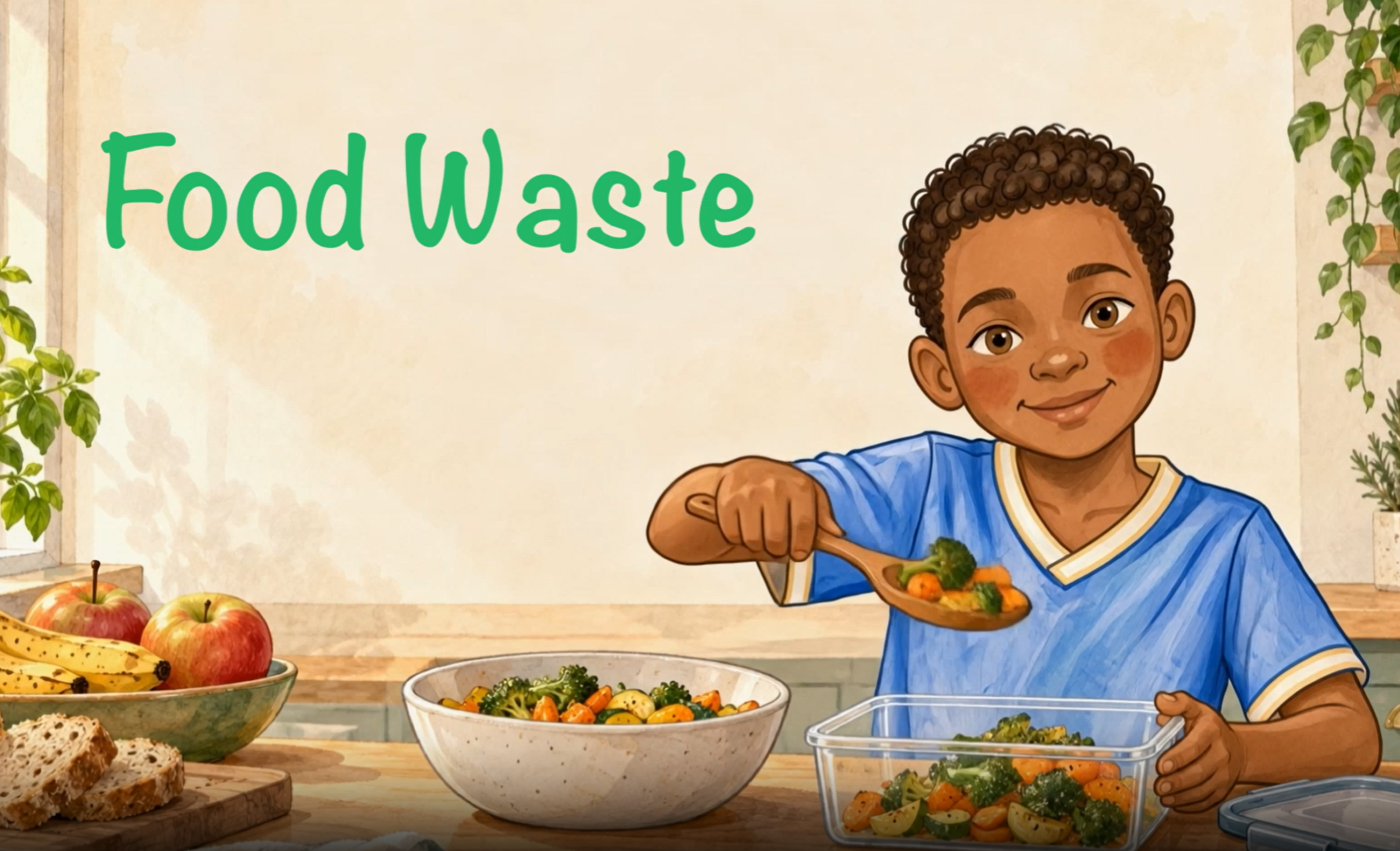
Course 3: Why Should Nothing Go to Waste? – Turning Knowledge into Action
The final course moves from understanding food systems to taking practical action.
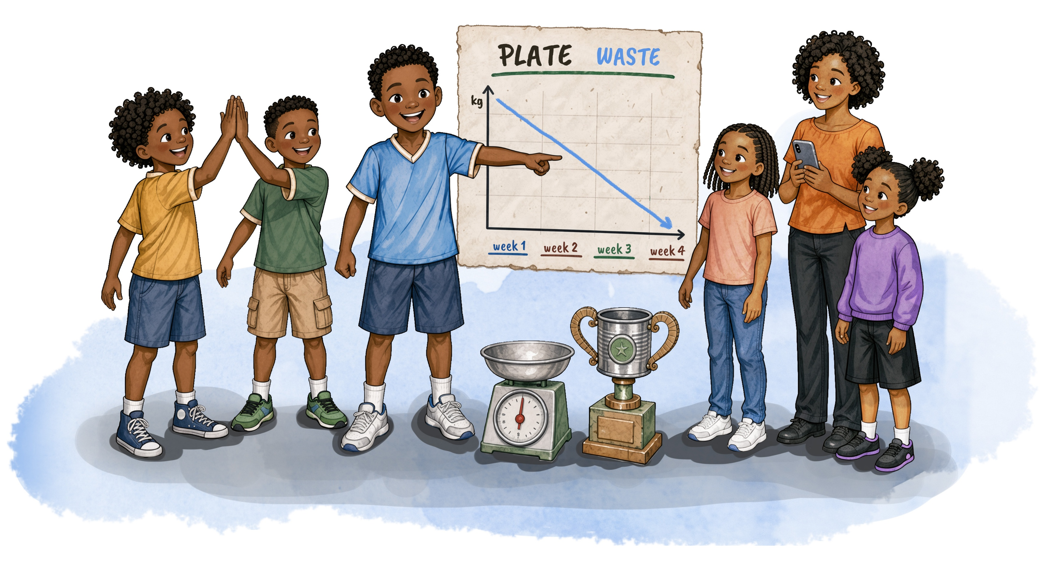
With Sipho from South Africa as their guide, children investigate why food is wasted, what happens when food is thrown away and how waste affects the environment and our communities.
Inspired by the work of youth networks involved in the CHOICE South African pilot, the course introduces simple ways to prevent food waste in everyday life.
From understanding food date labels to finding creative uses for leftovers and participating in classroom challenges, children are encouraged to become active participants in reducing waste.
By the end of the trilogy, young learners have explored not only where food comes from and how to choose it responsibly, but also how their own actions can help make a difference.
Empowering Young People to Become Part of the Solution
Climate change and sustainable food systems can be complex topics, but understanding them should not be limited to scientists and policymakers.
Through CHOICE Food Explorers, the CHOICE project extends its commitment to inclusive climate engagement to younger generations, translating real-world sustainability challenges into accessible and meaningful educational experiences.
By connecting scientific knowledge with creativity, participation and everyday decisions, the courses encourage children to see themselves as part of a wider effort to build healthier and more sustainable food systems.
Because learning about climate action is an important first step. Discovering how to make a difference is what turns that learning into action.
What’s Included in Each Course?
Every CHOICE Food Explorers course comes with a complete, ready-to-use toolkit for educators – everything needed to plan, teach and extend the lesson:
Illustrated presentation
A picture-led slide deck with child-friendly explanations and discussion questions to spark conversation.
Educator guide & speaker notes
Learning objectives, lesson plans and practical tips to help teachers lead each session with confidence.
Animated video
A short video featuring the course characters – perfect for introducing or recapping the lesson.
“Made by class” activities
Step-by-step instructions for hands-on tasks such as card sorting, simple experiments and role-play.
Printable storybook
A book-like version of the slides that pairs illustrations with text, ideal for classroom or home reading.
The materials are fully flexible: use a single course as a stand-alone lesson, or follow all three for the complete Discover – Choose – Act learning journey.
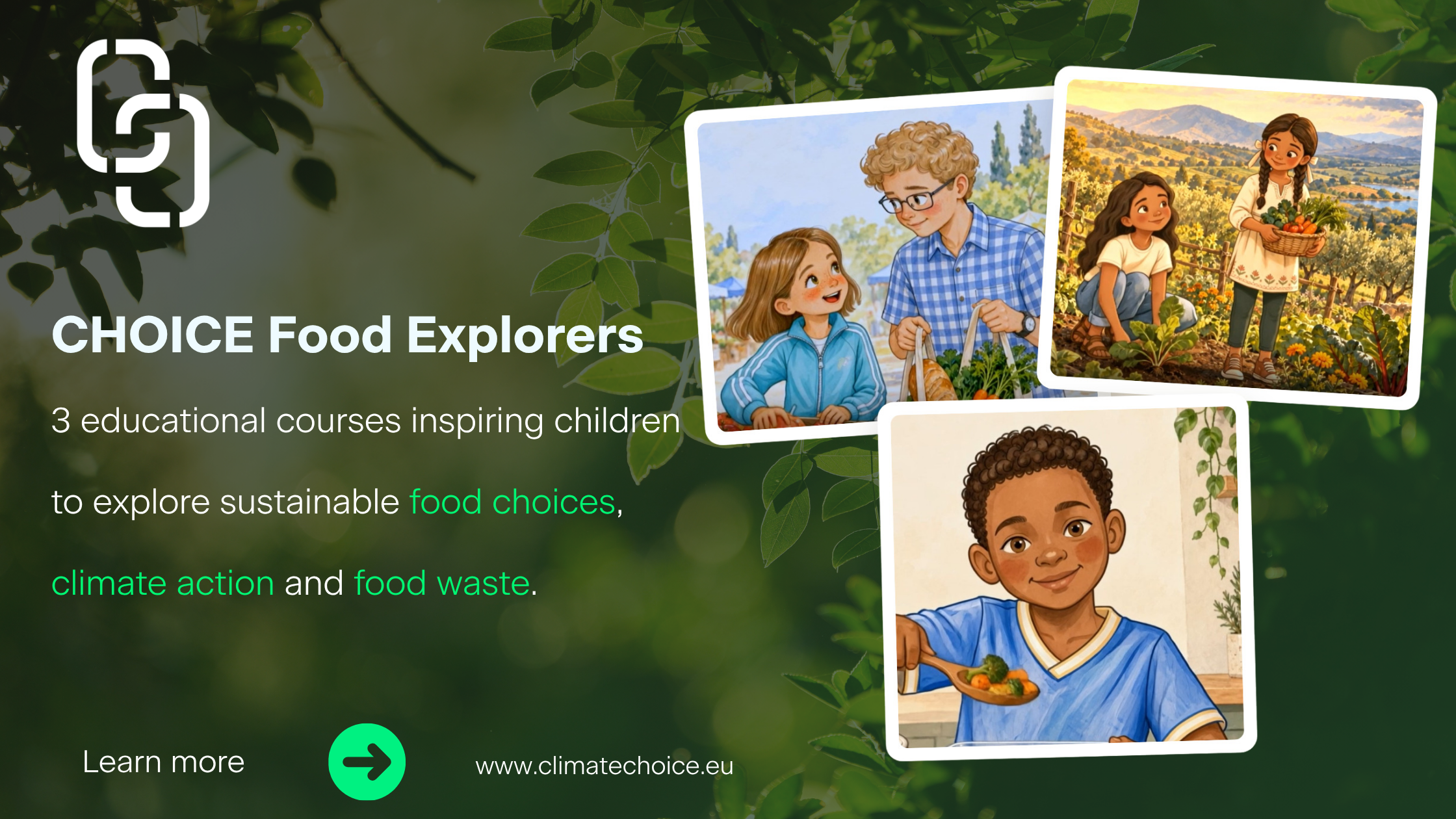
Explore CHOICE Food Explorers!
Are you a teacher, educator or youth organisation looking for engaging ways to introduce children to sustainability?
Discover the three CHOICE Food Explorers courses and bring climate-conscious learning into your classroom!
All educational materials are provided under the Creative Commons Attribution 4.0 (CC BY 4.0) licence, allowing educators and organisations to use, adapt and share them with appropriate attribution.
Explore the courses and access the educational resources through the CHOICE website – Resources, Courses section.