As food systems become increasingly complex and disconnected, many consumers no longer know where their food comes from, who produces it, or how it reaches their table. At the same time, small local producers often struggle with visibility, distribution, and direct access to consumers — despite growing interest in sustainable and locally produced food.
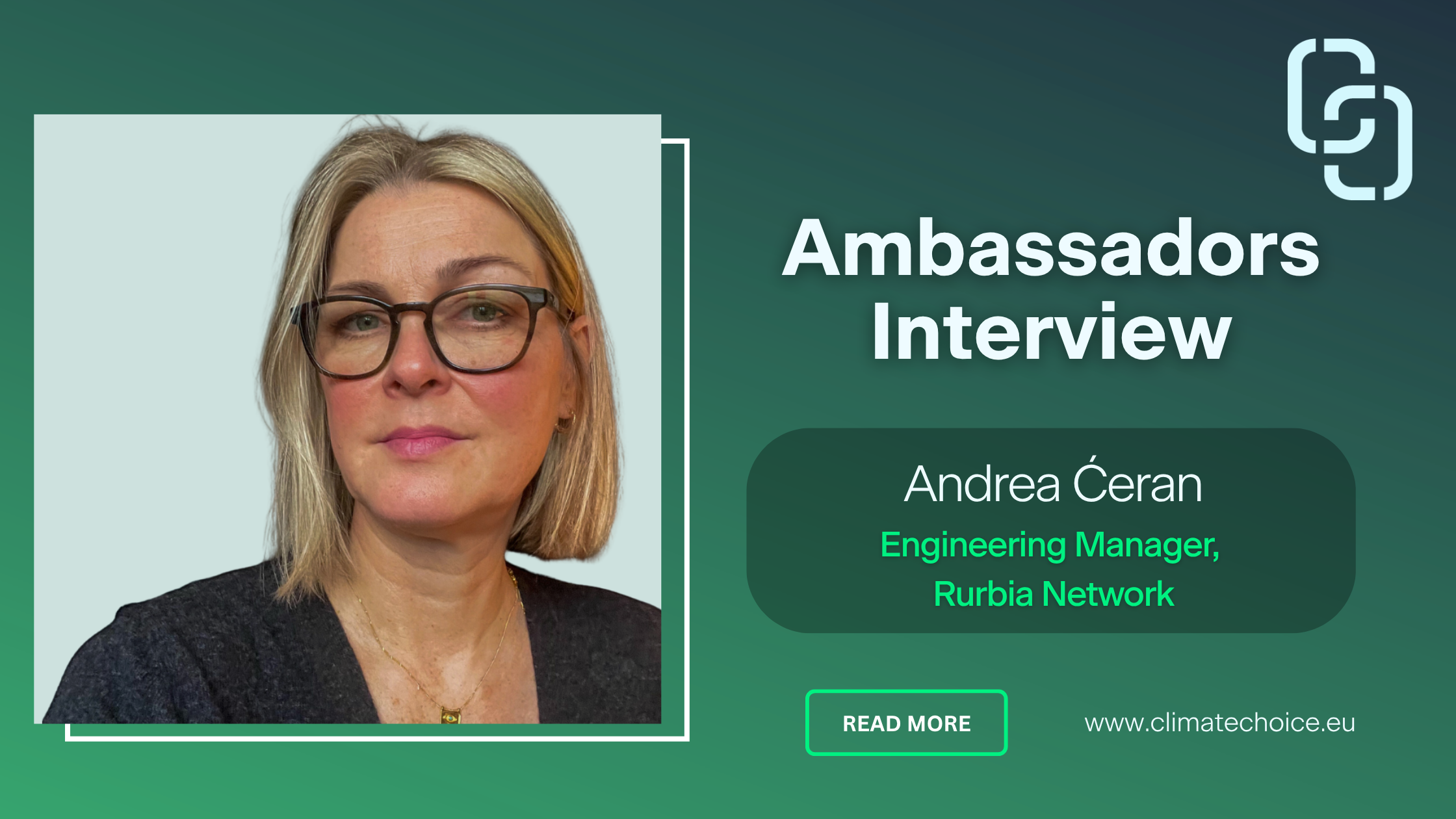
In this interview, CHOICE Ambassador and Rurbia founder Andrea Ceran reflects on how digital tools can help bridge this gap by making local food systems more accessible, transparent, and engaging. Drawing from her experience in technology and product development, Andrea explains how digital platforms can support small producers, strengthen urban–rural connections, and help sustainable choices become part of people’s everyday routines.
Rather than replacing human relationships, Andrea highlights how technology can create new opportunities for people to reconnect with local communities, rural experiences, and the stories behind the food they consume — an approach that closely aligns with the CHOICE vision for more inclusive and climate-conscious food systems.
1. Your professional background combines technology leadership with a growing focus on sustainable food systems. What inspired you to start exploring the intersection between digital tools and the future of food?
My background is in building and scaling digital products, but over time, I became more intentional about applying that experience to areas where it can have a more direct, valuable impact.
I was motivated by the opportunity to create significant influence by supporting small producers in reaching a wider audience and increasing consumer awareness. Producers often struggle to get noticed and distribute their products, while consumers lack clear information about where their food comes from or how it is produced. Digital tools could help close this gap with practical solutions, since it is not caused by low demand or poor quality. The main issue is that producers and consumers lack effective channels for connecting and communicating.
By exploring this area, I can use product thinking and technology to help connect and improve these systems.
2. Through Rurbia, you are working to connect people with small producers and rural food experiences. How can digital platforms help strengthen the relationship between citizens and local food systems?
Digital platforms help small producers get noticed and make their products easier to find. By bringing together offerings from a range of small producers, these platforms make it easier for people to explore choices and connect directly with producers.
These platforms also give people more context. Most of us don’t know where our food comes from or how it is made. Clear information helps people make better choices.
With Rurbia, the goal is not just to make transactions easier. It is about creating experiences that let people connect directly with producers and rural places. Technology is just the tool, and the real aim is to build genuine, real-world relationships.
3. CHOICE explores how everyday decisions influence food systems and climate outcomes. From your perspective, how can technology help people make more sustainable food choices?
Most people pick their food based on what is available, what they know, and their habits, rather than on sustainability. Technology can make it easier to find and understand better options, like what is local or in season.
Sustainable choices need to be simple, because people tend to avoid extra effort. That is why technology should make things easier and help better choices fit naturally into people’s routines.
4. One of the challenges in sustainable food systems is bridging the gap between urban consumers and rural producers. What opportunities do you see for digital innovation in building stronger urban–rural food connections?
There is a big gap between food produced in rural areas and how it reaches people in cities.
Practically speaking, there is a lot we can do to better connect supply and demand. Many small producers don’t have easy ways to reach people in cities, and current systems don’t really work for them. Digital tools can help by making it easier to group products, organise delivery, and connect directly.
The bigger opportunity is building connections. People in cities rarely connect with where their food comes from, and that affects how they value it.
Digital platforms could help people engage more directly by visiting producers, finding local food experiences, or learning about the people behind the products. They don’t have to replace what exists, but can offer new, more connected options.
It is not only about moving food efficiently. It’s also about rebuilding relationships that have been lost.
5. With your background in engineering leadership and product development, how can technology be designed in ways that encourage more conscious and responsible consumption behaviours?
People tend to form habits around what is convenient, visible, and familiar to them. The experience needs to change first. If options are hard to find or use, people won’t use them.
The key is to help people notice available options, reduce the effort needed to access them, and offer clear, concise information to support better choices.
Simple actions, such as drawing attention to local products or indicating the origin of items, can influence behaviour naturally rather than relying on persuasion.
6. As a CHOICE Ambassador and founder of Rurbia, what message would you like to share about the role of citizens, technology and local communities in shaping more sustainable food systems?
Real change occurs when all parts of the system collaborate, rather than relying on isolated efforts. People’s choices depend on what they can access, and technology could help by making alternatives more visible and interesting, especially at the local level.
Local communities are already leading the initiatives, but often lack visibility and access. The focus should be on building connections. When it’s easier to access, understand, and engage with producers, sustainable systems follow naturally.


Leave a Reply