CHOICE Final Event in Athens: Three Years of Results for Climate-Conscious Food Systems
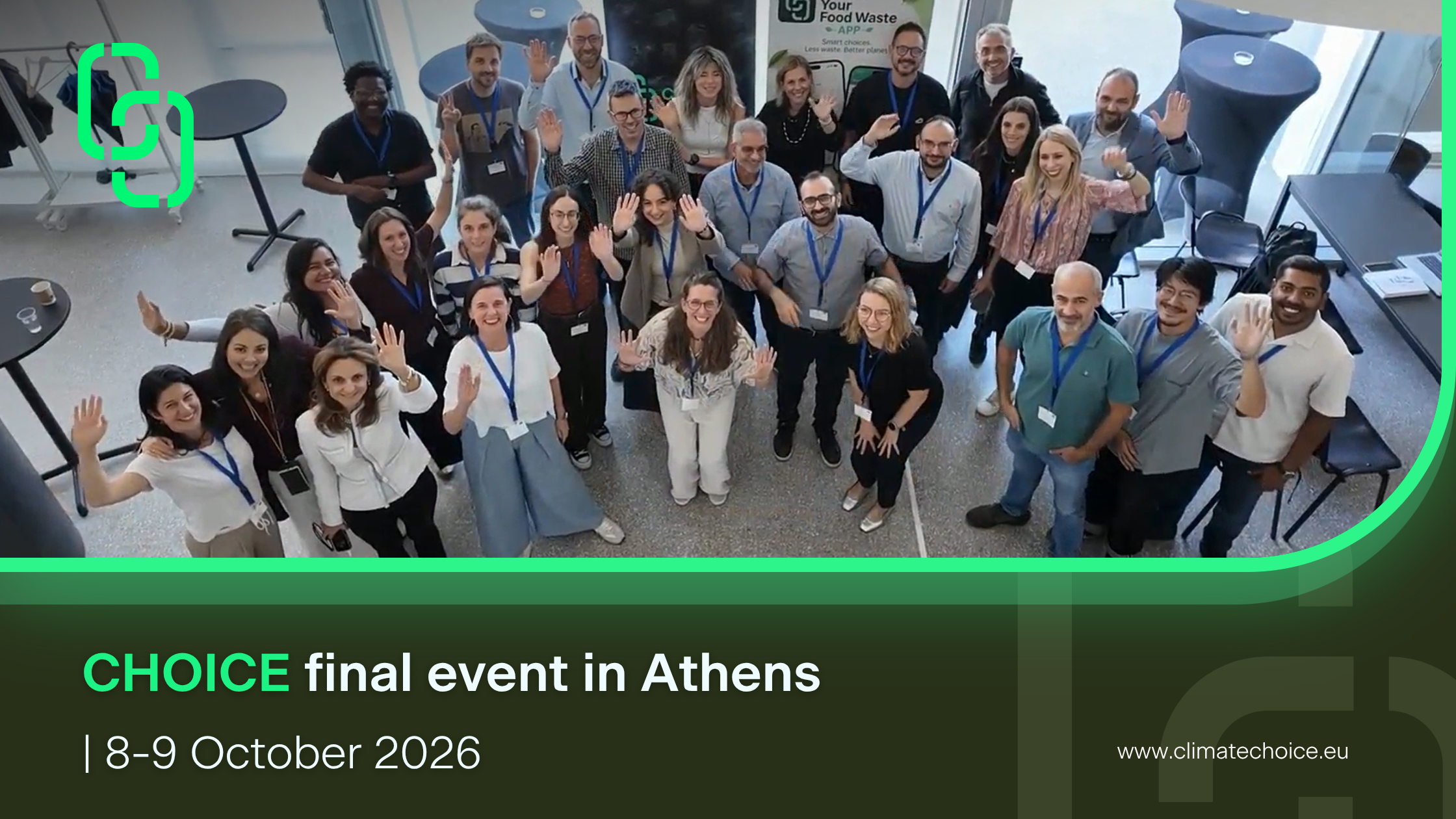
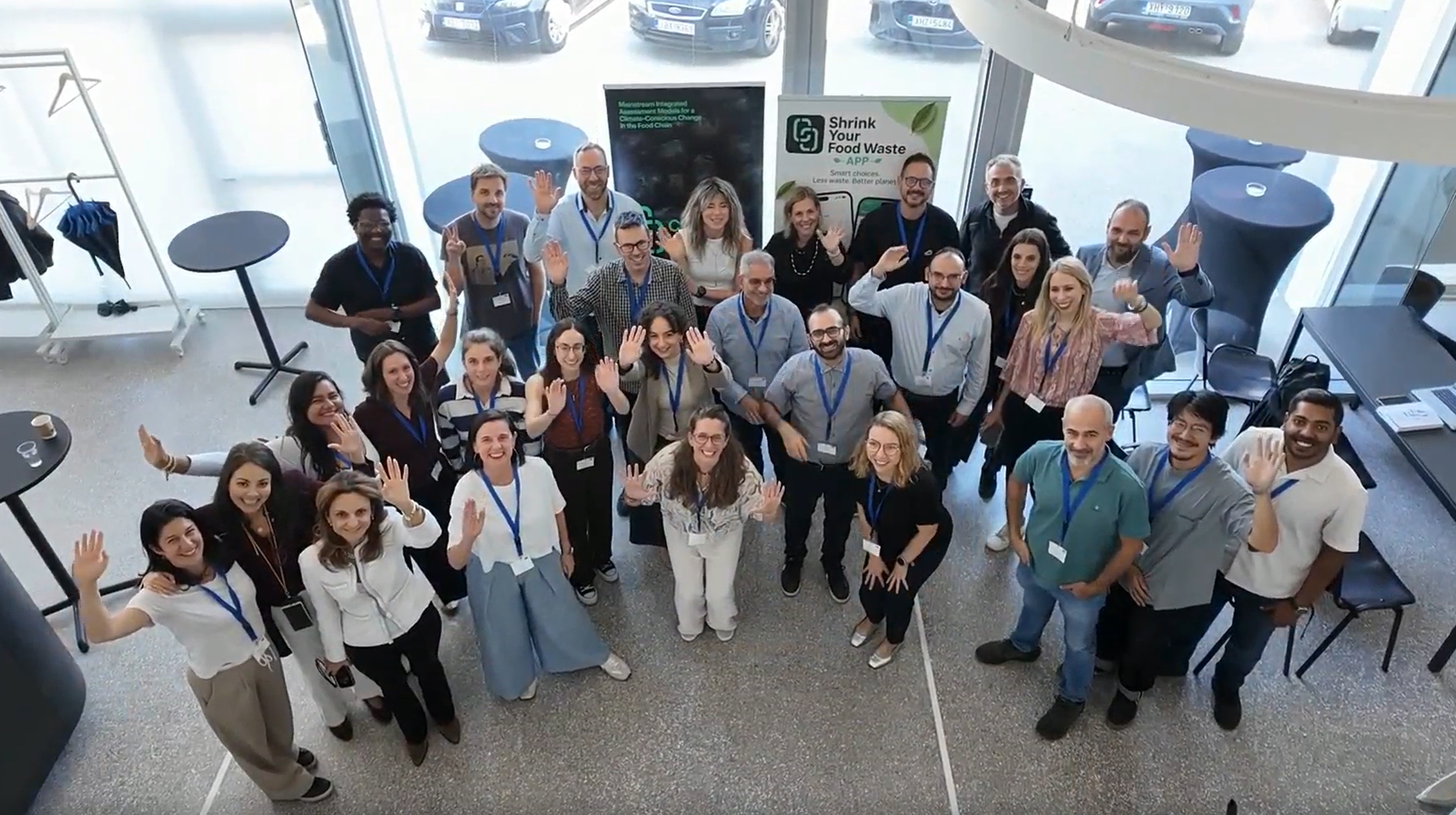
On 8–9 October 2026, the CHOICE consortium gathered at the CogniSensus premises of the Institute of Communication and Computer Systems (ICCS) in Athens, Greece, for the project’s Final Event. Marking the culmination of three years of collaboration, the meeting brought together partners from Europe, Africa and Latin America to present the results of all seven work packages, share the outcomes of five pilot demonstrations, and discuss how CHOICE’s tools and knowledge can continue to support more sustainable food systems and climate-conscious choices.

Day One: Results Across the Work Packages

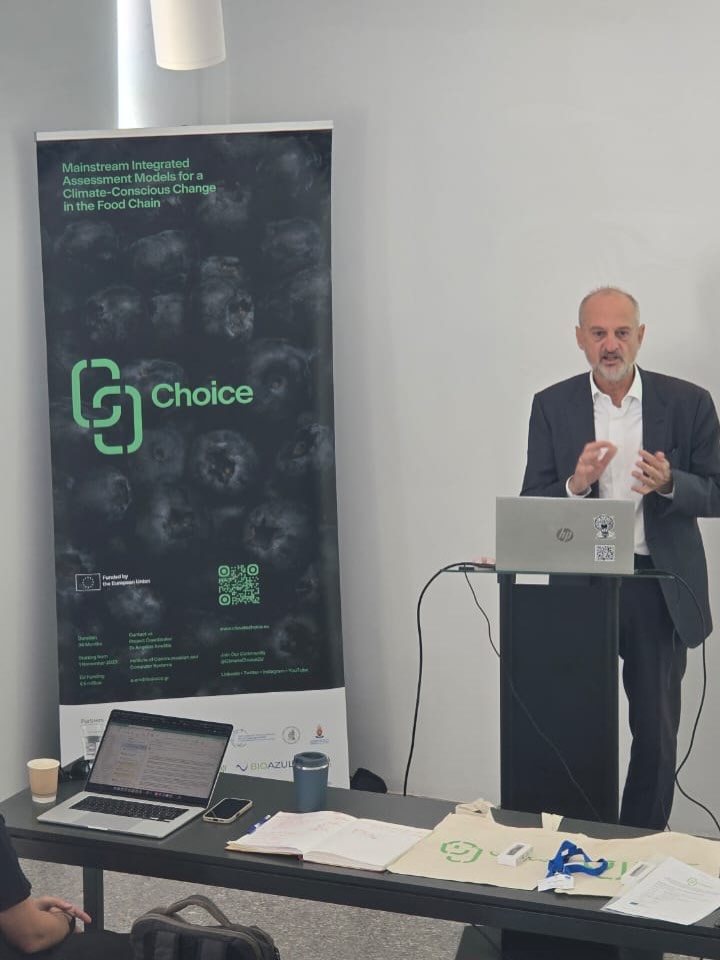
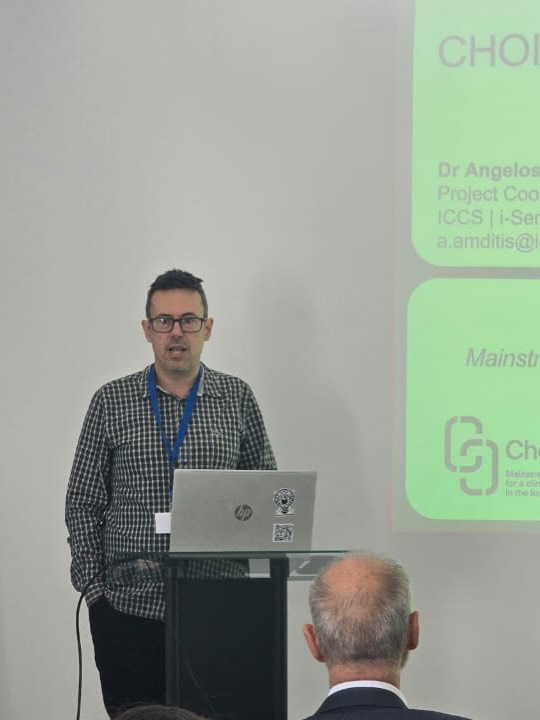
The event opened with an overview by Dr Angelos Amditis (ICCS), Project Coordinator, who reflected on the project’s activities and achievements over the past three years and outlined the next steps towards its formal completion in October 2026.

Dr Angelos Amditis, CHOICE Project Coordinator, Institute of Communication and Computer Systems (ICCS), opening the Final Event with an overview of the project’s activities and achievements over the past three years
WP1 – Project Coordination, presented by Dr Nikos Tantaroudas (I-SENSE Group, ICCS), reviewed the project’s management, quality assurance, risk management and data protection processes. The presentation confirmed that deliverables due to date had been submitted, all five project milestones had been reached, and no deviations had been reported against the amended Description of Action. It also highlighted collaboration with sister projects, including OrganicClimateNET, NEVERMORE and ClieNFarms, as well as the work of the CHOICE gender balance committee.

Dr Nikolaos Tantaroudas (ICCS), presenting WP1 – Project Coordination, including the project’s management, quality assurance, risk management and data protection processes
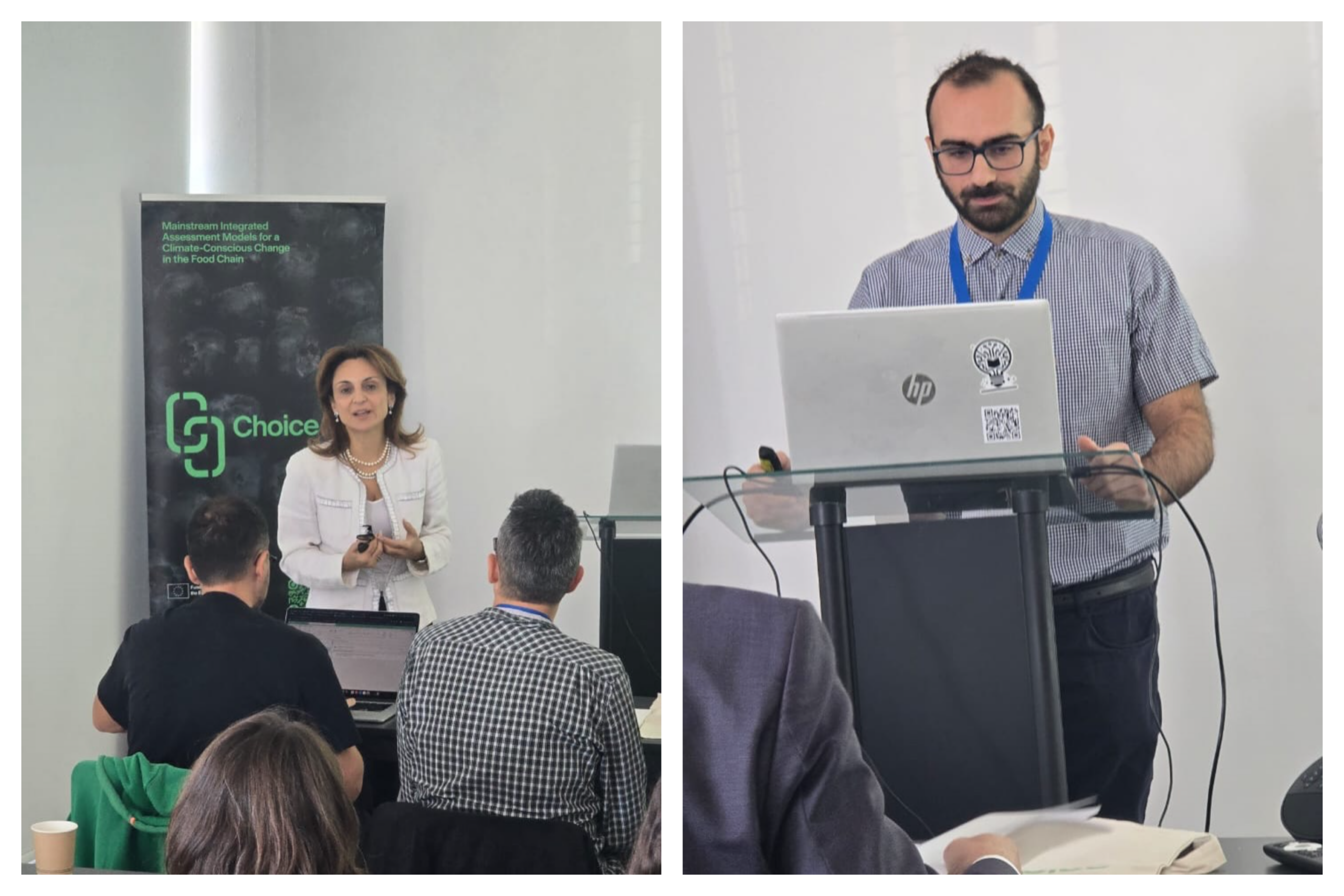
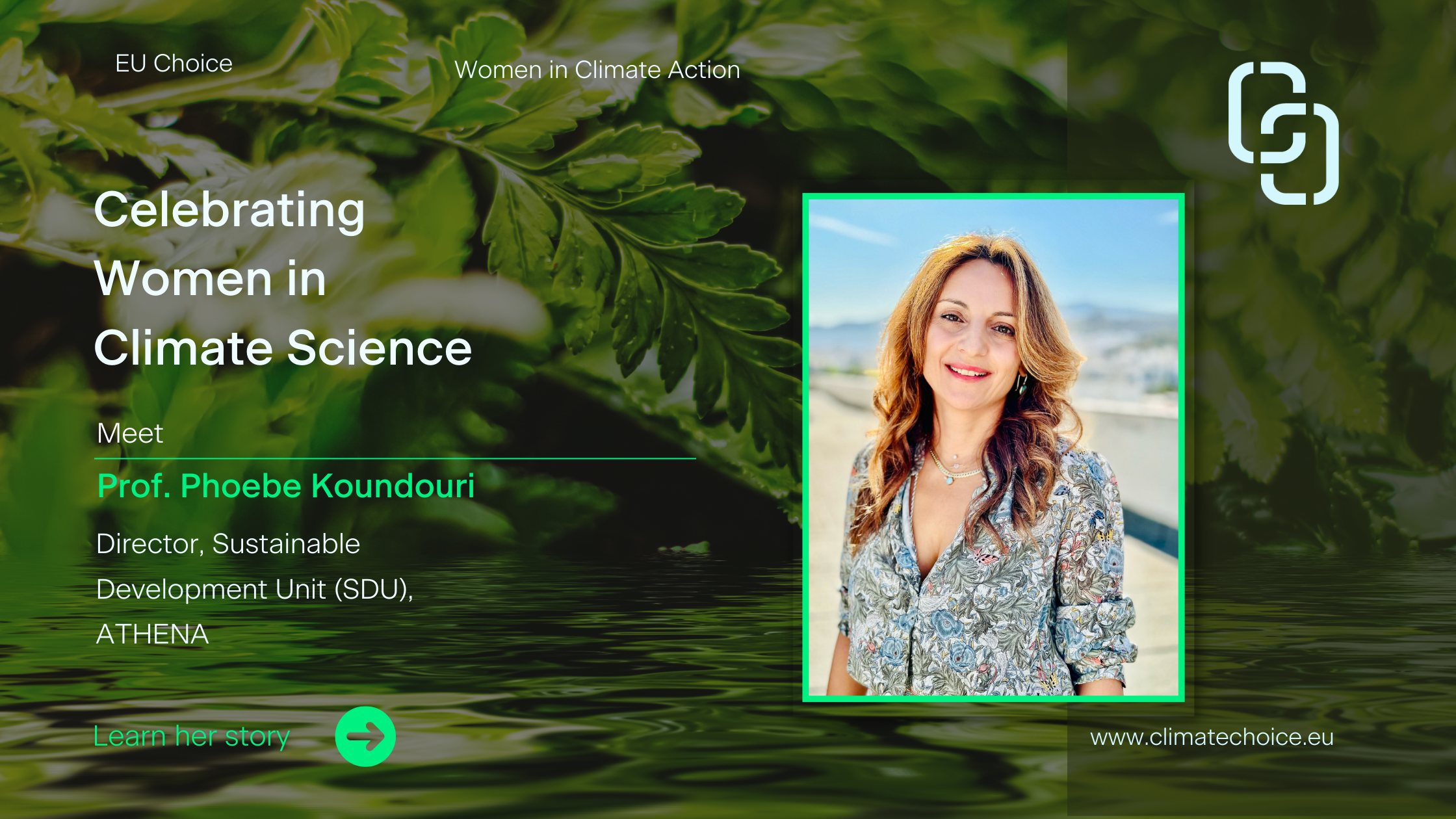
WP2 – Modelling and promoting behaviour change around food towards IPCC goals was opened by WP2 Leader Prof. Phoebe Koundouri (ATHENA Research Center). Theodoros Daglis (ATHENA) then presented the stakeholder mapping framework, the modelling of behavioural change options and the design of engagement campaigns co-created with stakeholders through three rounds of participatory labs across the five pilots.

Discrete choice experiments involving 741 farmers and consumers revealed the factors driving or hindering sustainable choices, from the compensation requirements of olive farmers in Andalusia to the importance of clear COâ‚‚ information in consumers’ purchasing decisions. The findings highlighted the need for context-sensitive interventions that account for differences in preferences, economic constraints and individual circumstances.

Evi Brousta and Yannis Kopsinis (LIBRA AI Technologies) presented the A/B Testing Platform developed to measure how audiences respond to campaign messages. Using a Bayesian approach, the platform enabled the comparison of alternative messages and visual materials across retailer and cooperative websites, newsletters, display advertising, WhatsApp groups and survey platforms.

Across the five pilots, A/B testing was implemented through different digital channels, including retailer websites, newsletters, online surveys and WhatsApp groups. The WP2 team reported 18 completed A/B tests, together with three additional pairwise comparisons from the Austrian pilot whose results were pending at the time of the presentation.

Prof. Phoebe Koundouri, ATHENA Research Center, opening WP2 – Modelling and promoting behaviour change around food towards IPCC goals; Theodoros Daglis, ATHENA Research Center, presenting the stakeholder mapping framework, the modelling of behavioural change options and the co-created engagement campaigns
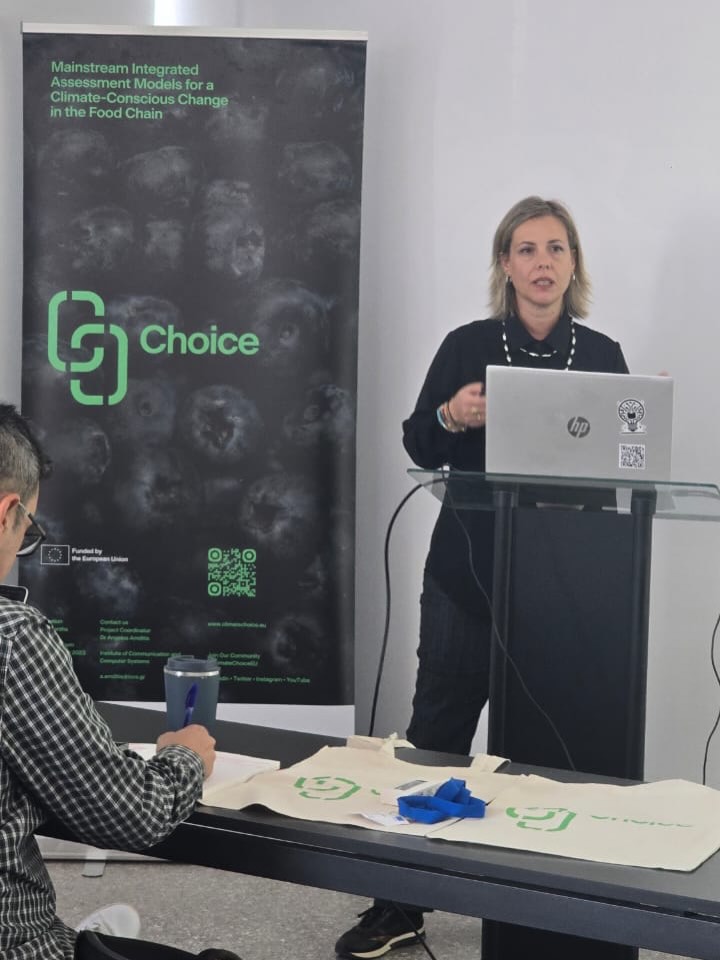
Evi Brousta, LIBRA AI Technologies, presenting the A/B Testing Platform developed to measure how audiences respond to CHOICE campaign messages
WP3 – Mainstreaming IAM Modelling and WP5 – Assessment of climate pathways and trade-offs with biodiversity, health and other SDGs demonstrated how CHOICE is bringing human behaviour and actor heterogeneity into Integrated Assessment Models (IAMs).

Marta Kozicka (IIASA) presented the improved representation of heterogeneous consumers in GLOBIOM, differentiating food demand by age and sex. The work also introduced a health module connecting dietary consumption patterns with estimated health outcomes and explored the upscaling of CHOICE dietary scenarios to Sub-Saharan Africa and the global level.

Ryan Tan (IIASA) presented the lifestyle module and the regionalised FeliX model (FeliX-R5), publicly released on GitHub, together with its interactive simulation environment, FeliXSim. Model simulations exploring flexitarian diet adoption and the elimination of consumer food waste projected reductions of approximately 21–30% in pasture/red-meat demand by 2050, corresponding to 27–47 million tonnes in the modelled food-demand results. The scenarios also showed increased demand for plant-based food categories.

Dr Christos Giannakopoulos (National Observatory of Athens) presented statistically downscaled climate indices relevant to olive cultivation and livestock farming in Spain. These included indicators related to temperature, precipitation, drought, frost and livestock heat stress, selected to respond to agricultural decision-making needs.

Md Jahidul Hoque (SDSN) presented the open-source FABLE Calculator Interactive Simulation Environment, the new FABLE spatial module and scenario results for South Africa. Scenario analysis using the FABLE Calculator indicated that dietary transitions, including greater consumption of indigenous crops such as millet and sorghum, could reduce South Africa’s Agriculture, Forestry and Other Land Use (AFOLU) greenhouse gas emissions by 12–33% by 2050 under the modelled assumptions. Related modelling also explored the impacts of reducing food loss and waste.

Capacity-building activities included a Massive Open Online Course (MOOC) on the FABLE Calculator, whose introductory session attracted 90 registered participants from 35 countries, and the serious game 2050 is Now, designed to help participants explore food-system decisions and their interconnected consequences.

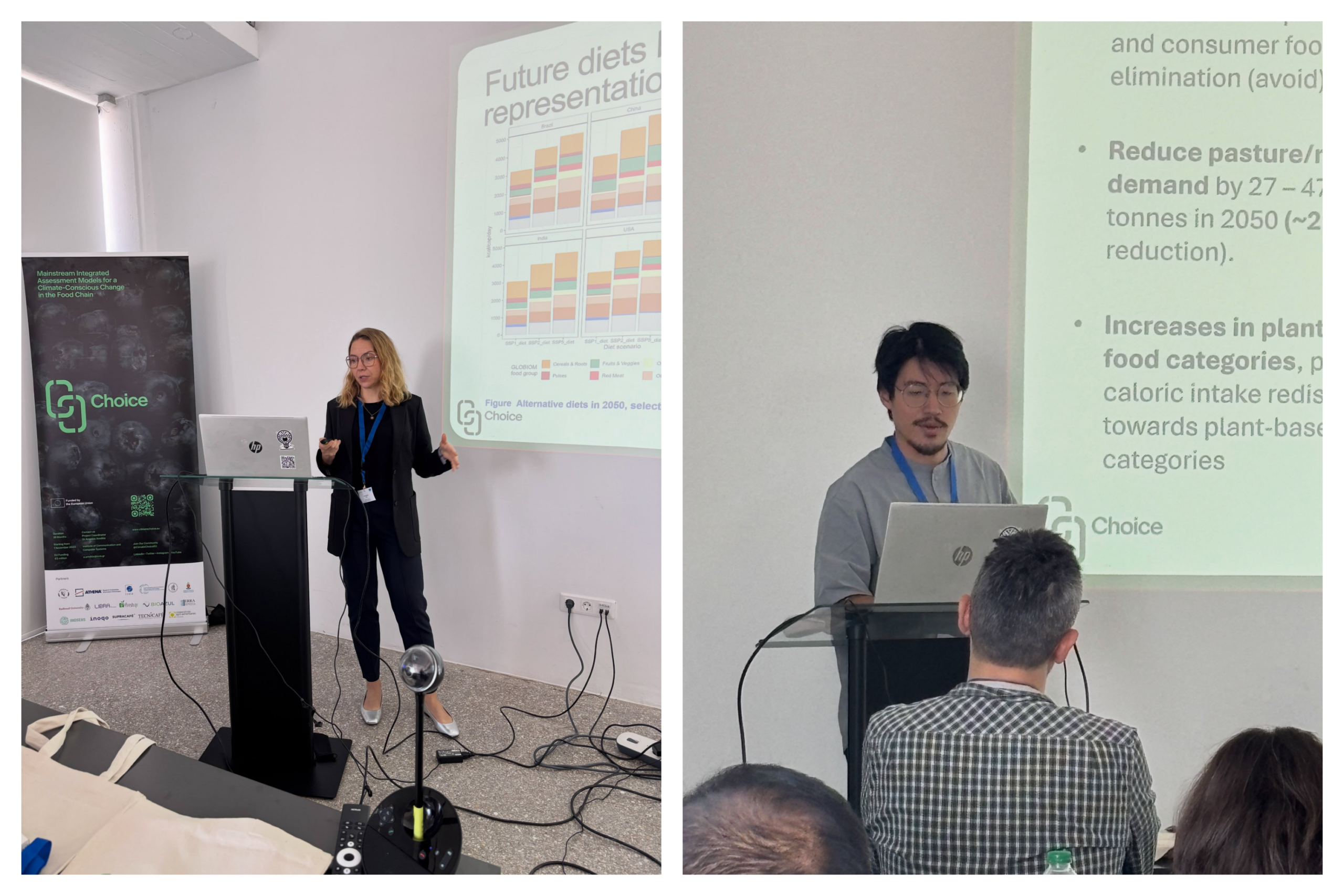
Marta Kozicka, (IIASA), presenting the improved representation of heterogeneous consumers in GLOBIOM; Ryan Tan, (IIASA), presenting the lifestyle module, the regionalised FeliX model (FeliX-R5) and FeliXSim
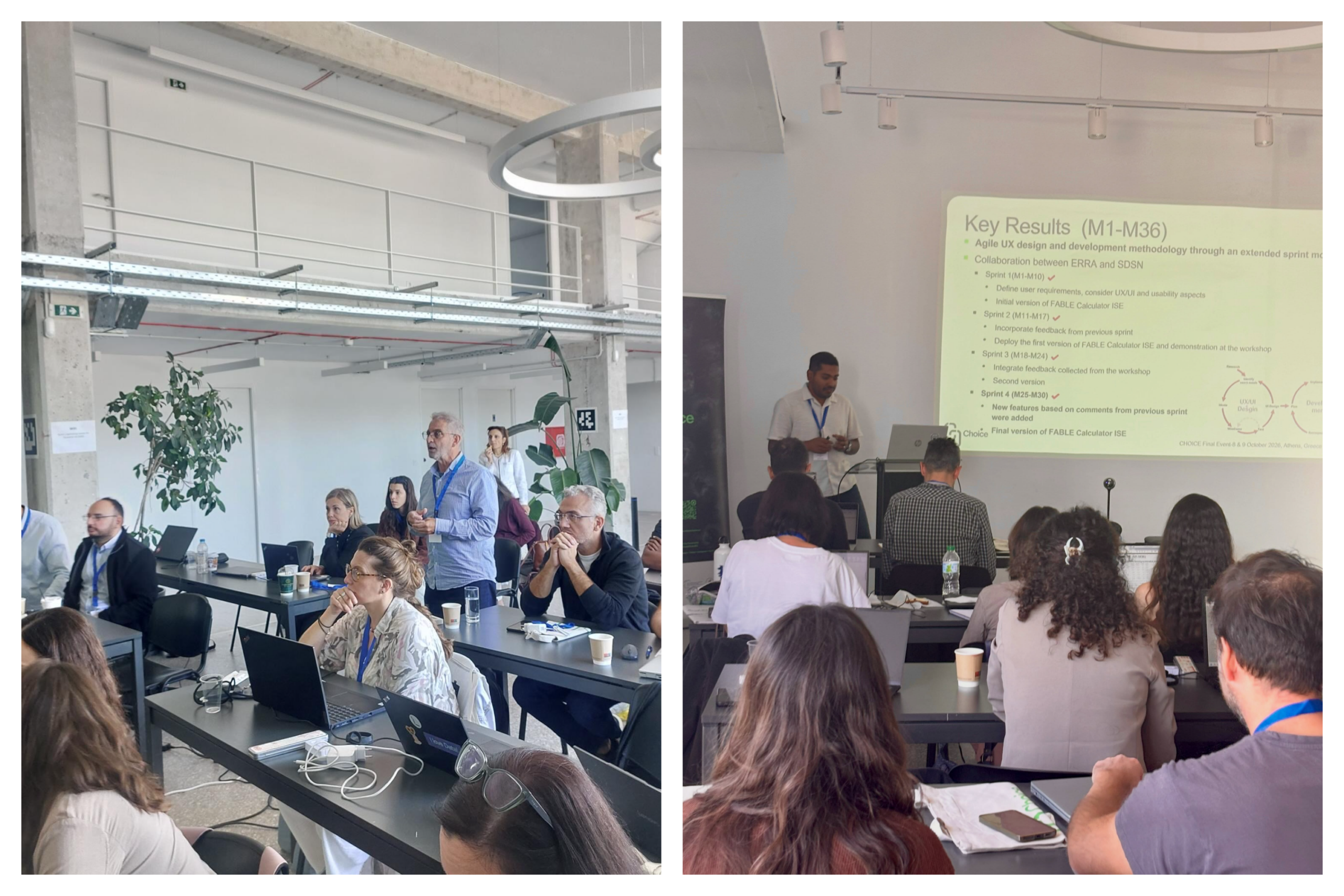
Dr Christos Giannakopoulos, (NOA), presenting downscaled climate indices for olive cultivation and livestock farming in Spain; Md Jahidul Hoque, (SDSN), presenting the FABLE Calculator Interactive Simulation Environment, the FABLE spatial module and scenario results for South Africa
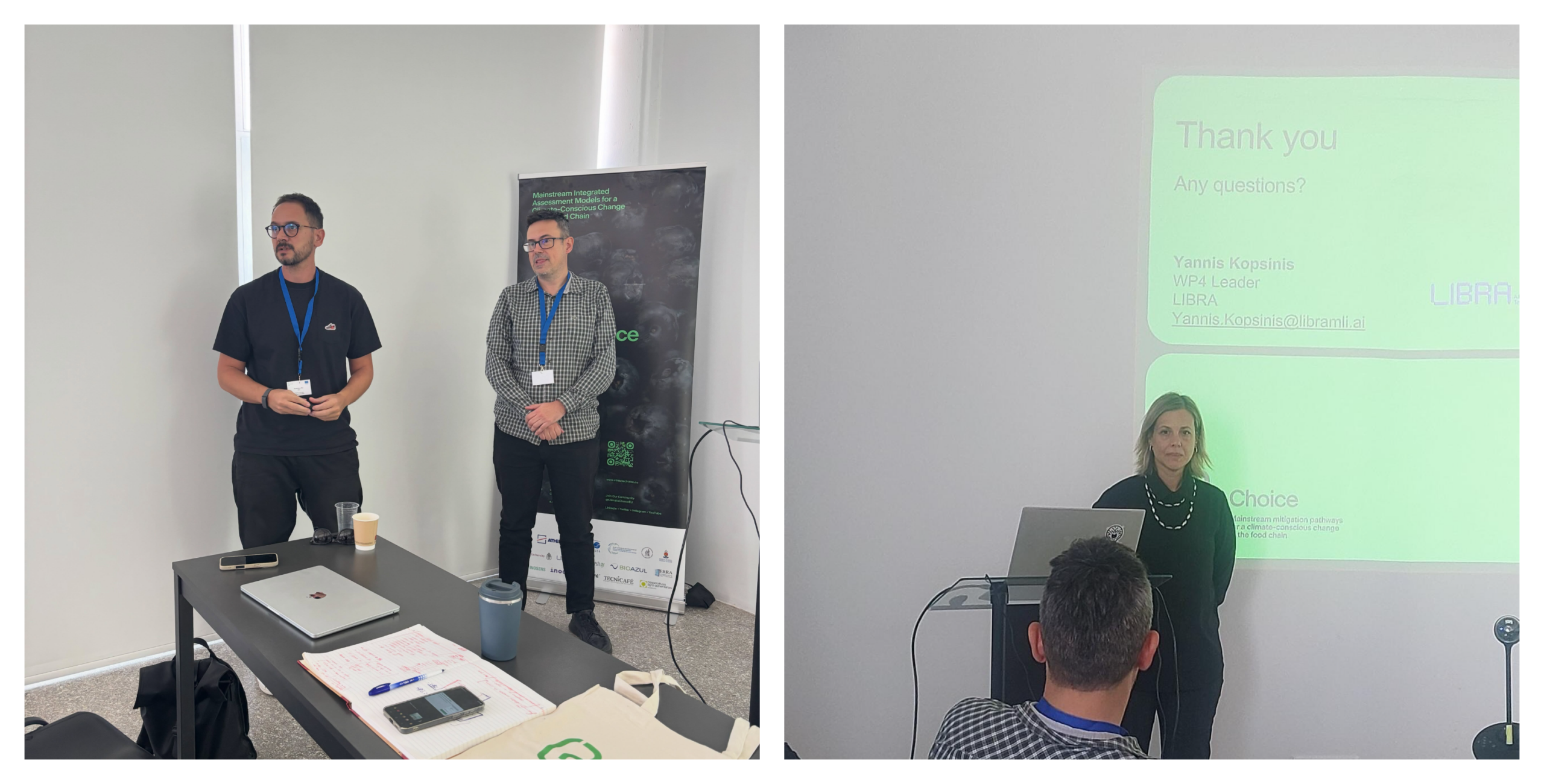
WP4 – Immersive digital tools to support behaviour change and action on food mitigation measures, led by Yannis Kopsinis (LIBRA AI Technologies), showcased the tools developed to make climate and food-system information more accessible and actionable.

Dr Ilias Karachalios (ICCS) presented the review of digital tools supporting food-related mitigation measures, including an open knowledge base of 201 digital tools and a related scientific publication in Open Research Europe.

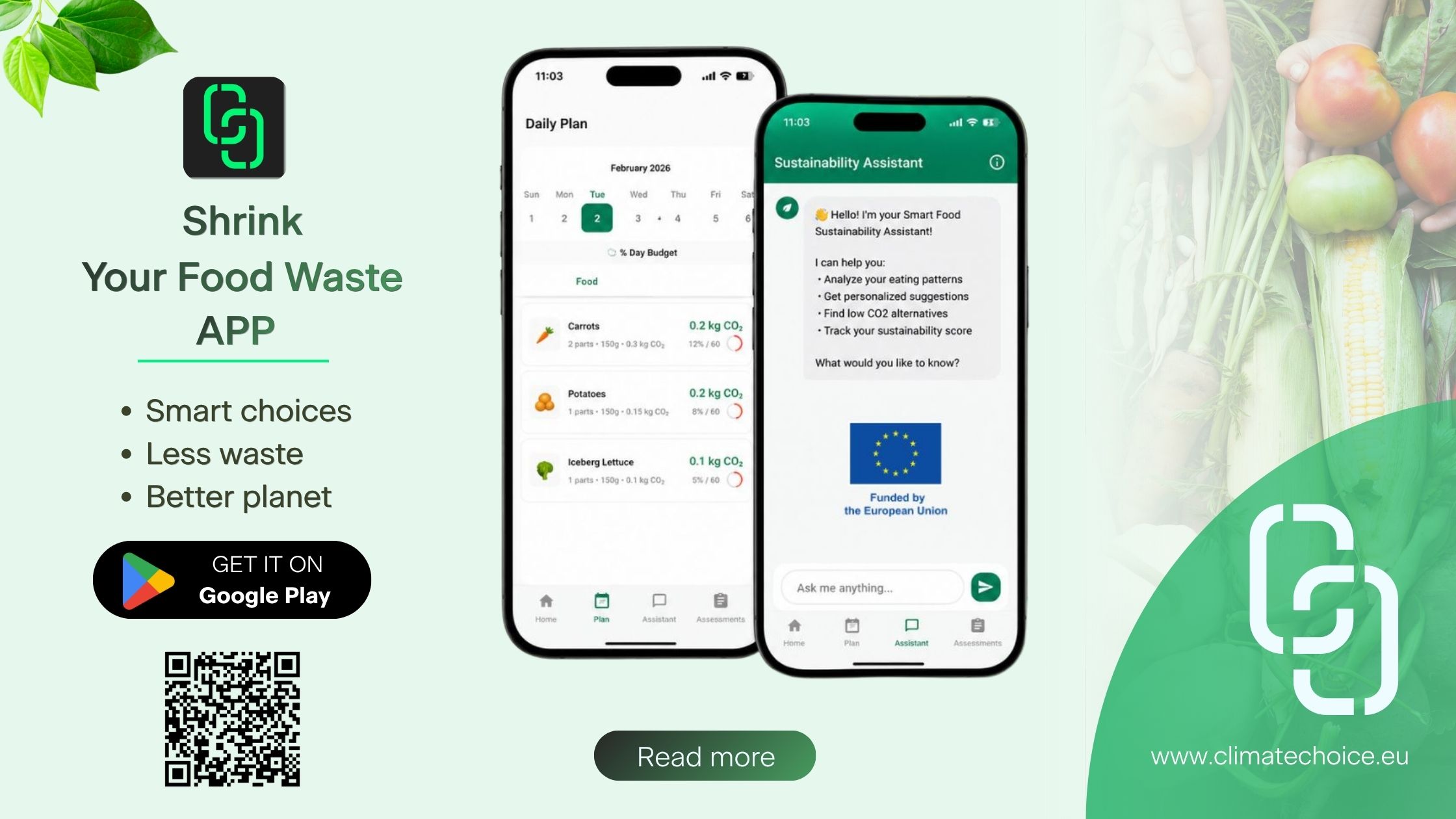
Dr Nikos Tantaroudas (ICCS) presented inoqo’s product climate-impact assessment platform and the Shrink Your Food Waste mobile app. The app combines meal planning, food-product climate-impact information, daily footprint tracking and interactive data stories to help users understand the environmental implications of their dietary choices.

Evi Brousta (LIBRA AI Technologies) showcased IIASA’s CHOICE contribution to Hotspot Earth, a serious game that combines action gameplay with information about climate change, societal decisions and sustainable behaviours. She also presented the final portfolio of 30 data stories developed by LIBRA and deployed across all five pilot campaigns, together with additional stories integrated into CHOICE digital tools.

One data story drew on FeliX scenario projections to illustrate the potential impact of global dietary change. According to the modelled scenario, a worldwide shift towards flexitarian diets could reduce annual food-system greenhouse gas emissions by approximately 35% by 2050, compared with the projected baseline. The estimated reduction of around three billion tonnes of COâ‚‚-equivalent per year was illustrated as comparable to taking approximately 650 million cars off the road for one year.

Dr Ilias Karachalios, (ICCS), presenting the review of digital tools supporting food-related mitigation measures; Dr Nikolaos Tantaroudas, (ICCS), presenting inoqo’s product climate-impact assessment platform and the Shrink Your Food Waste app; Evi Brousta, LIBRA AI Technologies, presenting Hotspot Earth and the CHOICE data stories
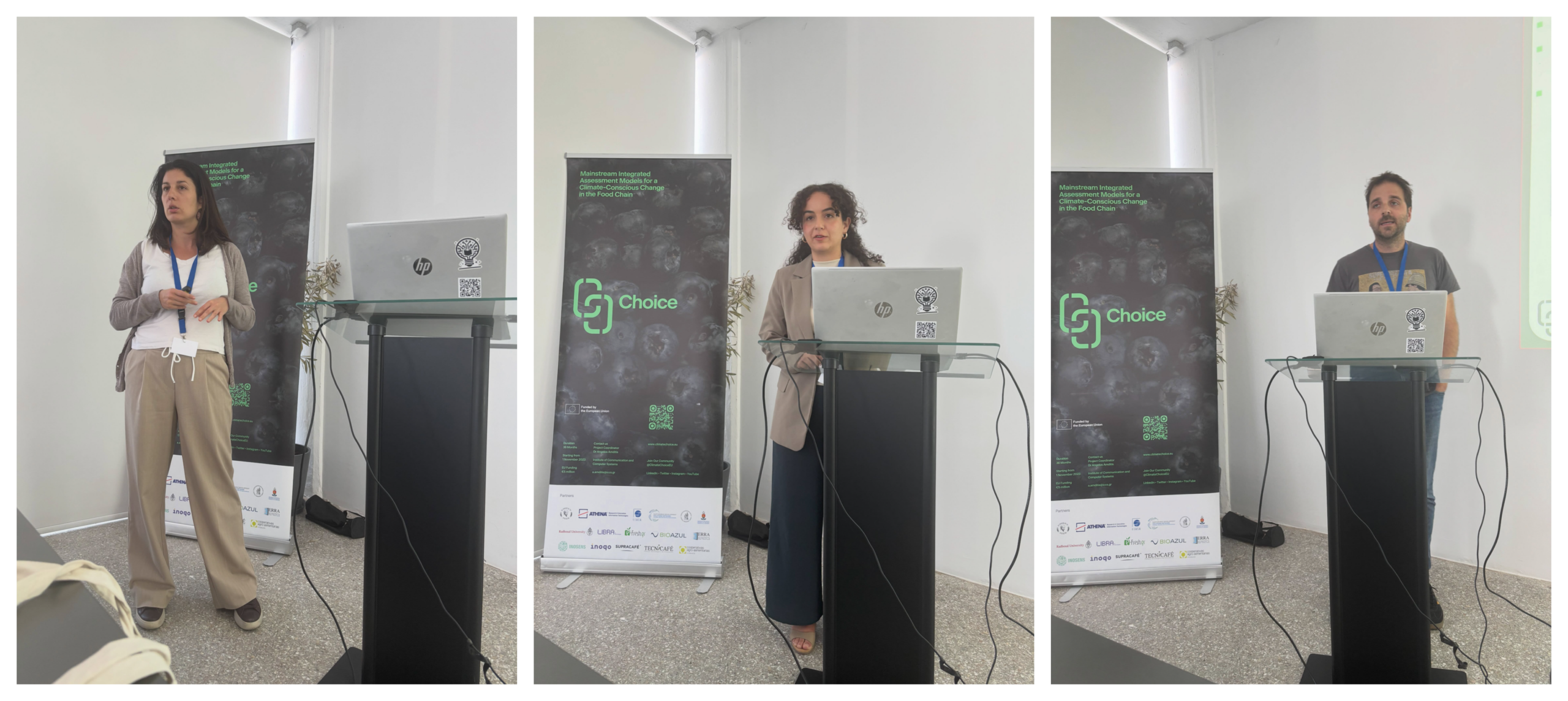
WP7 – Impact creation, outreach and exploitation of CHOICE, led by InoSens, closed the first day.

Georgia Papadogianni (LIBRA AI Technologies) presented the project’s communication and dissemination activities, covering the CHOICE brand identity and media kit, webinars, videos, press and media outreach, and 12 thematic social media campaigns. CHOICE exceeded several of its digital communication targets, recording 21,700 website visits and 206,108 social media impressions, alongside 730 social media posts across its main channels.

Orestis Speyer (National Observatory of Athens) presented the project’s scientific and policy-related outreach, including seven peer-reviewed publications, 18 scientific conference presentations, connections with policy, research, industry and civil-society actors, and a lecture held in Athens by IPCC Chair Sir Jim Skea.

Jovana Simić (InoSens) presented the CHOICE Ambassadors and communication partners, the project’s gender equality activities, including the Women for Climate Action campaign, and the updated exploitation strategy identifying 20 Key Exploitable Results. These cover new methodologies and models, technologies and digital solutions, networks, and knowledge resources.

Vladimir Mrkajić (InoSens) introduced CHOICE Food Explorers, an educational course set under development for children aged 8–12. The three linked courses explore where food comes from, how to make sustainable food choices and how to reduce food waste, using illustrations, storytelling and hands-on activities.

The day concluded with a wrap-up session and a social dinner in the centre of Athens.

Jovana Simić, InoSens, presenting the CHOICE Ambassadors, gender equality activities and the exploitation strategy; Georgia Papadogianni, LIBRA AI Technologies, presenting the project’s communication and dissemination activities; Orestis Speyer, National Observatory of Athens (NOA), presenting the project’s scientific and policy-related outreach
Day Two: The CHOICE Pilot Demonstrations

The second day focused on WP6 – European and international demonstrations to support demand-side measures in the food production, consumption and transport chain.

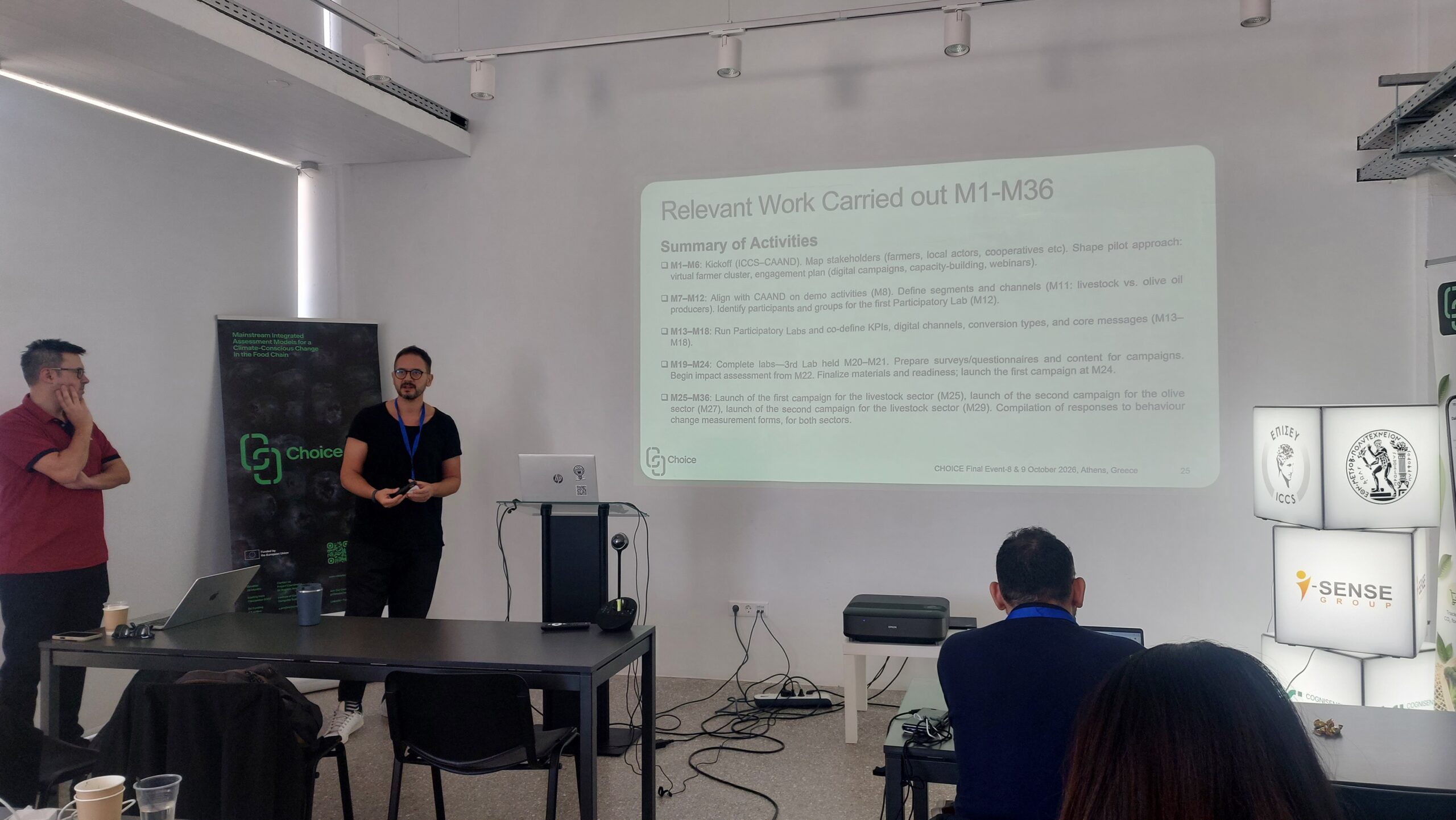
Dr Nikos Tantaroudas and Dr Ilias Karachalios (ICCS) presented how the pilot demonstrations were designed, coordinated and evaluated. The pilot leaders then shared results from their local engagement campaigns, illustrating how CHOICE combined behavioural insights, scientific information and digital tools with practical action.

The five pilots highlighted different pathways towards climate-conscious food systems:

  • Austrian pilot (inoqo): In collaboration with retailer dm in Germany, campaigns introduced consumers to COâ‚‚-equivalent information on food products. The first campaign attracted 464,195 unique visitors to its landing pages, exceeding its target of 300,000. During the fifth campaign, year-on-year sales of selected plant-based drinks increased, including a 58.8% rise for coconut drinks and 24% for cashew drinks. However, sales trends varied by product, and the evaluation highlighted the influence of promotional activity and wider market trends.
  • Greek pilot (e-Fresh): Campaigns on the e-Fresh.gr online supermarket combined product climate-impact information, sustainable shopping messages and affordability-focused communication. During the fourth campaign, revenue increased by 23.3% compared with the preceding period, alongside increases in product quantities and transactions. Pre- and post-campaign surveys also showed that the share of respondents reporting that they always buy sustainable products increased from approximately 2% to 7.5%. The evaluation emphasised that external and seasonal factors should be considered when interpreting purchasing changes.
  • Spanish pilot (CAAND, BIOAZUL): Campaigns targeting olive growers and livestock farmers in Andalusia promoted digitalisation, soil health, climate-resilient varieties and clean energy. Among olive farmers, reported use of digital tools increased by 107.77%, while digital record-keeping also increased significantly. Livestock farmers reported improvements in data-management practices, confidence in digital technologies and awareness of the economic benefits of renewable energy.
  • Colombian pilot (Supracafé, Tecnicafé): The Cinema at the Farm campaigns engaged women coffee producers from the AMUCC association through locally produced videos, peer learning and discussions on sustainable coffee farming. Monitoring visits to 63 farms recorded a 55.2% increase in compost application and a 24.3% reduction in petrol consumption, alongside a 10.4% reduction in water use during coffee post-harvest processing. The findings highlight the importance of accessible, community-led approaches to agricultural sustainability.
  • South African pilot (University of Pretoria): Campaigns engaged more than 1,000 young people through digital storytelling, surveys and practical activities focused on healthier diets, food waste and local food growing. Evaluations reported statistically significant changes in environmental awareness and self-reported household food-growing behaviours, including increases in respondents who had grown vegetables or herbs from seeds or regrown them from kitchen scraps.

Together, the demonstrations provided insights into how different audiences respond to sustainability information, behavioural interventions and locally relevant communication. They also highlighted the importance of evaluating results in context, recognising that changes in awareness, intentions and purchasing or farming practices do not always establish a direct causal effect from a single campaign.

The event concluded with a guided tour of the ICCS laboratory facilities.

Dr Ilias Karachalios and Dr Nikolaos Tantaroudas, presenting how the CHOICE pilot demonstrations were designed, coordinated and evaluated
Looking Ahead

The CHOICE Final Event demonstrated how three years of collaboration have connected climate modelling, behavioural science, digital innovation and real-world demonstrations to support more sustainable food systems.

From improved Integrated Assessment Models and accessible simulation environments to digital tools, data storytelling and locally co-created campaigns, CHOICE has produced scientific knowledge and practical resources that can support researchers, policymakers, food-system actors and citizens in exploring climate-conscious choices.

As the project approaches its formal completion on 31 October 2026, the consortium will finalise its remaining deliverables and reporting to the European Commission. Beyond the project, its publicly available models, tools, scientific findings, educational materials and established partnerships provide opportunities for continued research, policy engagement and wider uptake.

We warmly thank ICCS for hosting the Final Event and the entire CHOICE consortium, comprising the project coordinator and 15 partner organisations, for their collaboration, expertise and commitment throughout the CHOICE journey.

CHOICE has received funding from the European Union’s Horizon Europe research and innovation programme under Grant Agreement No. 101081617.