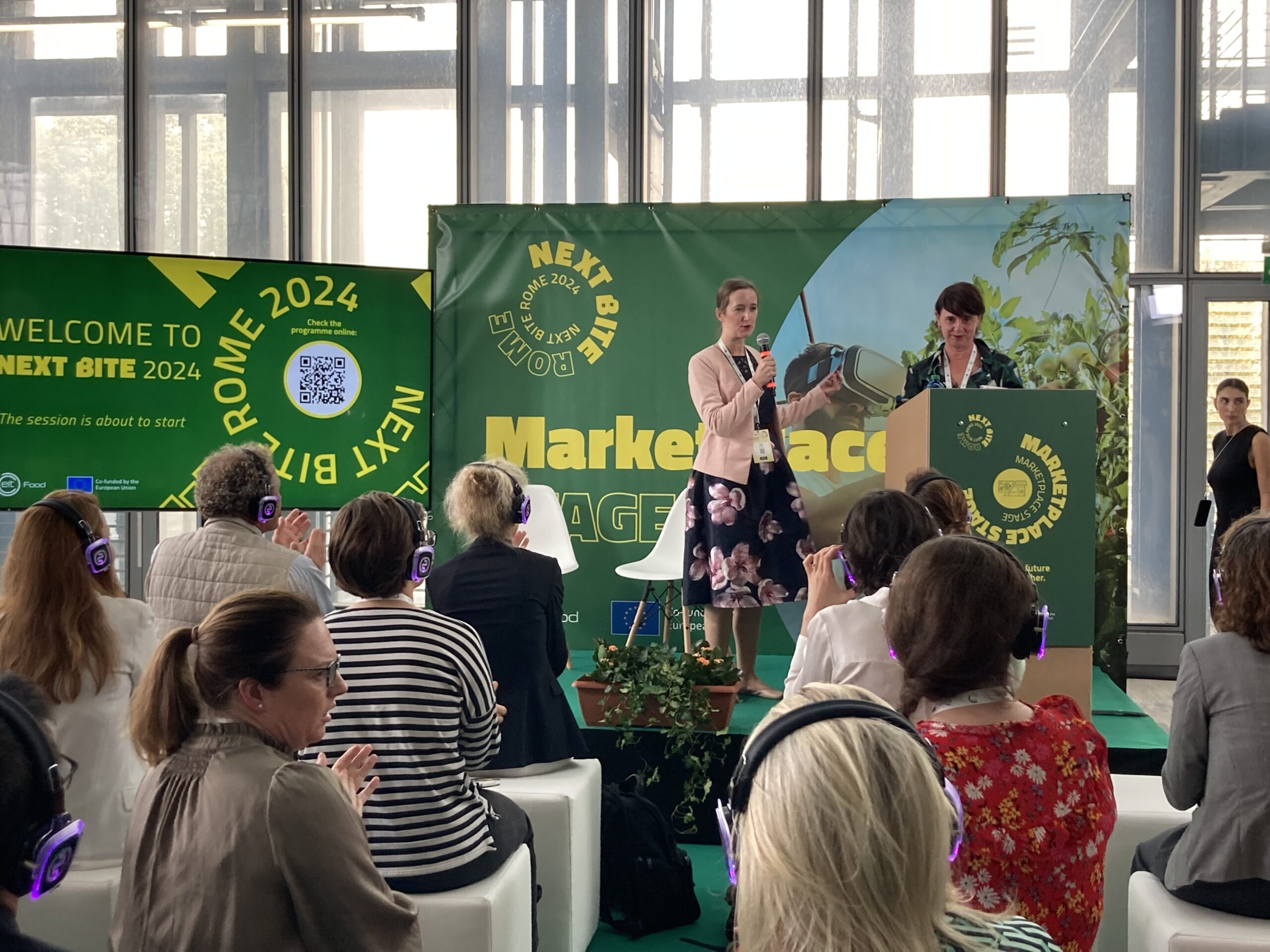
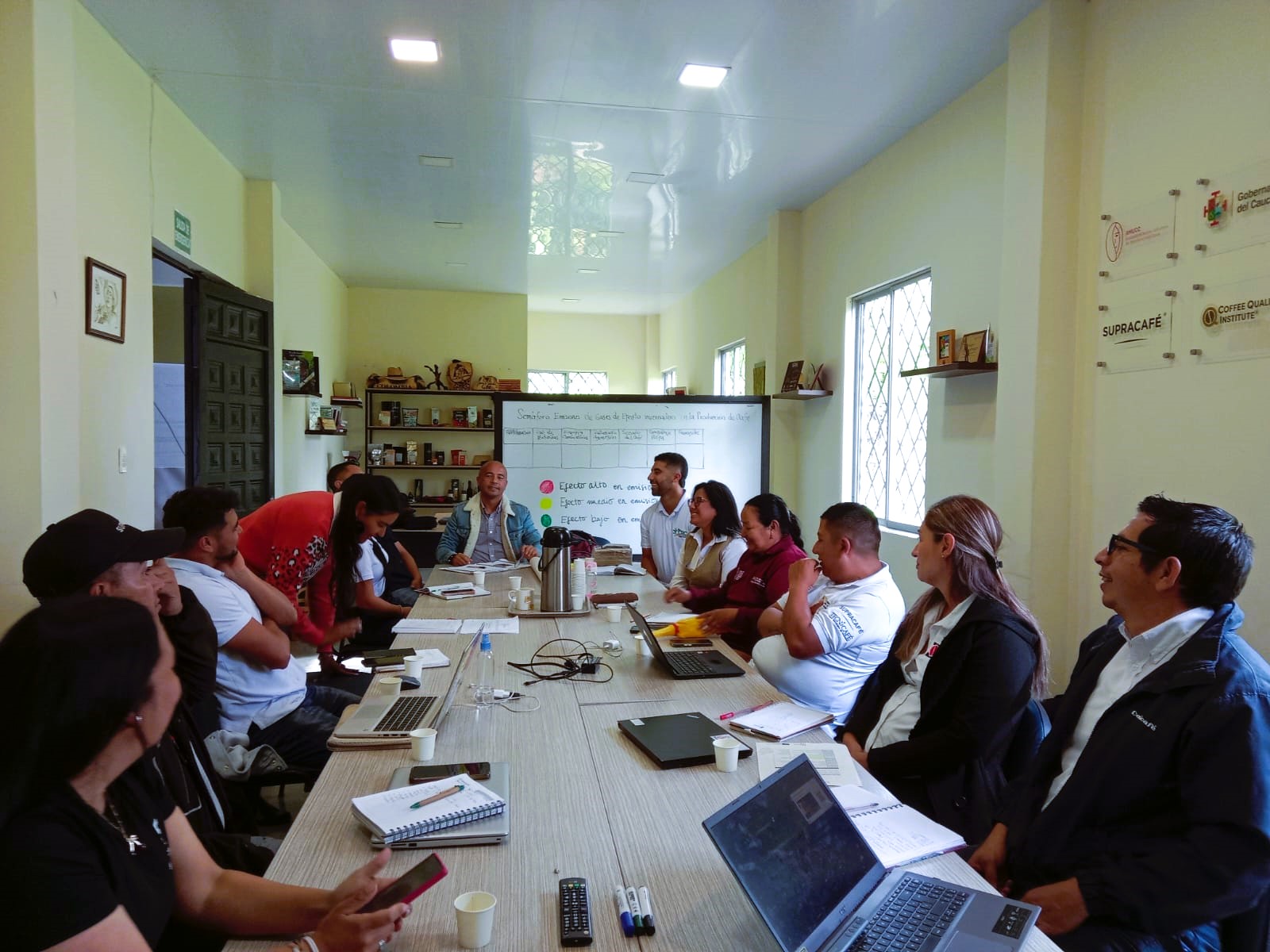
What if complex models could become tools that more people can explore, question and learn from?
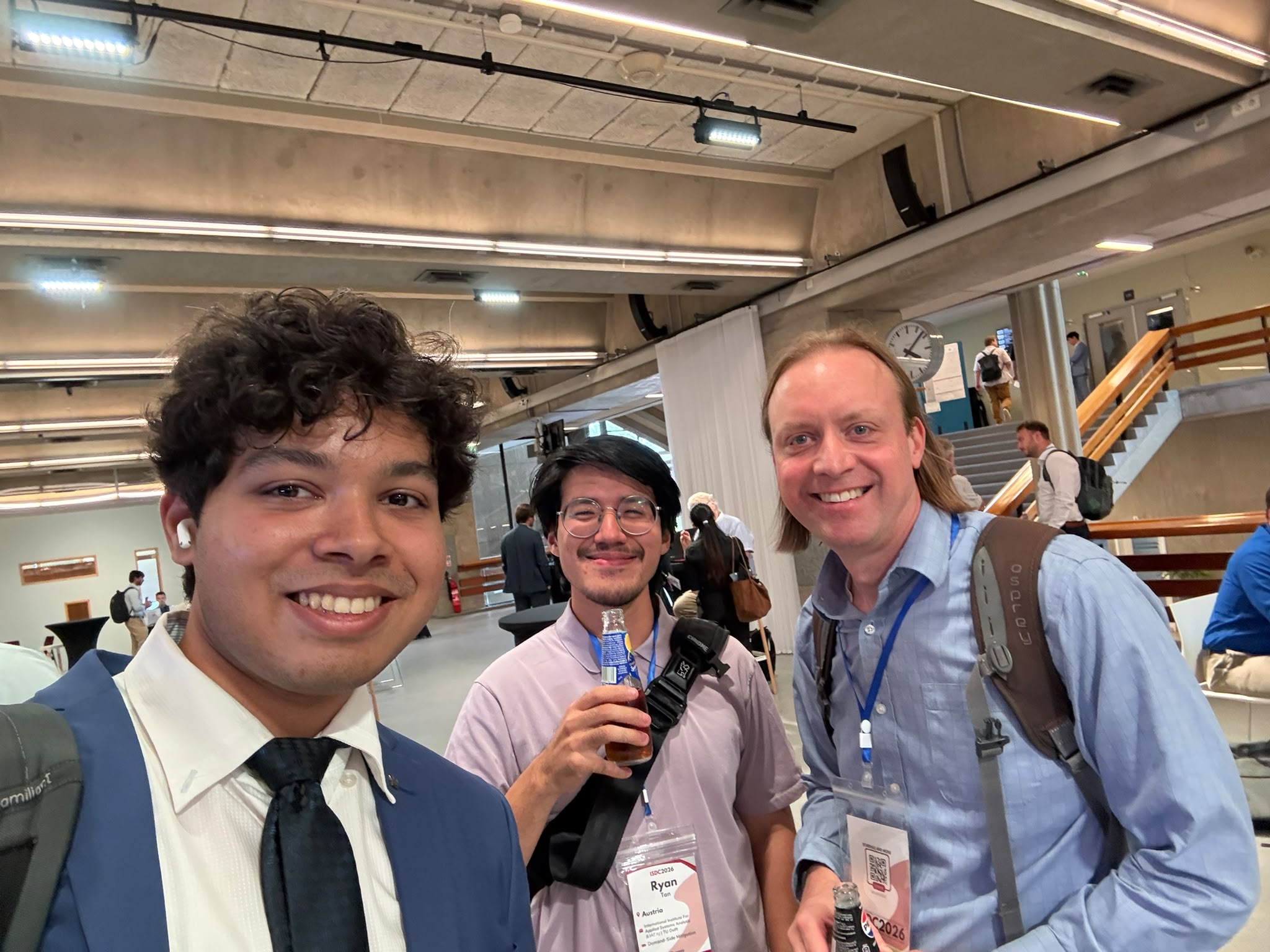
This question was at the heart of Ryan Yi Wei Tan and Sibel Eker’s contribution to the International System Dynamics Conference 2026, held from 20 to 24 July in Delft, the Netherlands. The conference brought together the international System Dynamics community to exchange research and practical approaches for understanding complex systems and supporting better-informed decisions.
Representing IIASA and the CHOICE project, Ryan and Sibel presented “FeliXSim: An Interactive Simulation Environment for Global Systems Modeling in Climate and Sustainability Contexts.” Their presentation introduced FeliXSim as a way to make complex global modelling more accessible and interactive for non-expert audiences.
Making integrated assessment models accessible to wider audiences
Integrated Assessment Models (IAMs) help researchers explore the long-term interactions between society, the economy, climate and the environment. Yet their complexity often limits their direct use to specialised modelling communities.
FeliXSim was developed to help close this accessibility gap. It is an open-source, browser-based Interactive Simulation Environment developed as an interface to the FeliX Integrated Assessment Model.
The tool focuses particularly on behaviour change and demand-side climate mitigation in the food system. Users can experiment with assumptions related to consumption, production, external drivers and uncertainties, and then explore possible outcomes for food, nutrition, land use, climate, fertiliser use, biodiversity and water.
Rather than presenting a single pathway, FeliXSim allows users to investigate different questions. For example, they can explore how dietary change may influence several sustainability outcomes or examine the behavioural drivers that could support large-scale changes in food consumption.
The platform supports real-time scenario exploration and includes a structure–behaviour display, a survey function for capturing personal preferences and a multi-scenario mode for comparing more than two scenarios. These features can support evidence-based policy deliberation and educational applications in systems thinking.
Exploring the power of food system choices
Conference participants also had the chance to try FeliXSim for themselves during the 90-minute workshop, “Low-carbon behavior changes: Exploring food system scenarios with FeliXSim,” led by Sibel Eker on 24 July.
The session guided participants through FeliXSim, showing them how to explore questions of interest, run and compare scenarios, make sense of feedback loops, and understand behaviour of key sustainability outcomes. No previous experience with System Dynamics or simulation software was needed, making the workshop open to people from a wide range of professional and academic backgrounds.
This hands-on approach reflects CHOICE’s goal of making Integrated Assessment Models easier to understand, more useful and more engaging. Through the FeliX Interactive Simulation Environment, stakeholders can explore how changes in food system behaviour may influence climate and other sustainability outcomes, while gaining a clearer picture of the potential benefits and trade-offs associated with more sustainable food choices.
Bringing human behaviour into sustainability pathways
CHOICE-related discussions at the conference went beyond the digital interface itself.
The roundtable “Integrating Human Decision-Making and Behaviour in Modeling to Support Policy Design for Sustainability Transformation” brought together Merla Kubli, Sibel Eker, Etiënne Rouwette and Christoph Schünemann. It explored how theories from psychology, sociology and behavioural economics can be integrated into Systems Thinking and System Dynamics models.
Participants were invited to exchange practical experiences, map existing behavioural approaches and contribute relevant literature. The roundtable focused on the importance of representing how people respond to policies and interventions—from individual decisions to broader societal transformations.
A further presentation by Etiënne Rouwette, Sibel Eker and Deepthi Swamy examined global food and energy scenarios driven by lifestyle changes. Their work introduces an endogenous lifestyle module into FeliX, modelling lifestyle change through opportunity, identity and experience effects and connecting these dynamics to food and energy demand.
The research shows why lifestyle change cannot be treated solely as an exogenous assumption. Different population groups may follow distinct demand pathways, while the economic and demographic impacts of climate change can also further influence behaviour change and lifestyle transitions.
Better engagement for better-informed choices
Together, these contributions reflected two ambitions central to CHOICE: improving how climate and sustainability models represent behavioural change and making their insights more accessible to wider audiences.
FeliXSim does not remove the complexity of food system transformation. Instead, it helps more people navigate that complexity, test assumptions and see how different parts of the system influence one another.
By combining scientific rigour with interactive exploration, participatory workshops and interdisciplinary dialogue, tools such as FeliXSim can turn climate modelling into a shared space for learning, discussion and more informed choices.
Want to dive deeper? Explore the full presentation here.