Stakeholders gathered in Pretoria to explore how local knowledge, behaviour change and food-system modelling can support healthier, more sustainable and resilient food choices in South Africa.
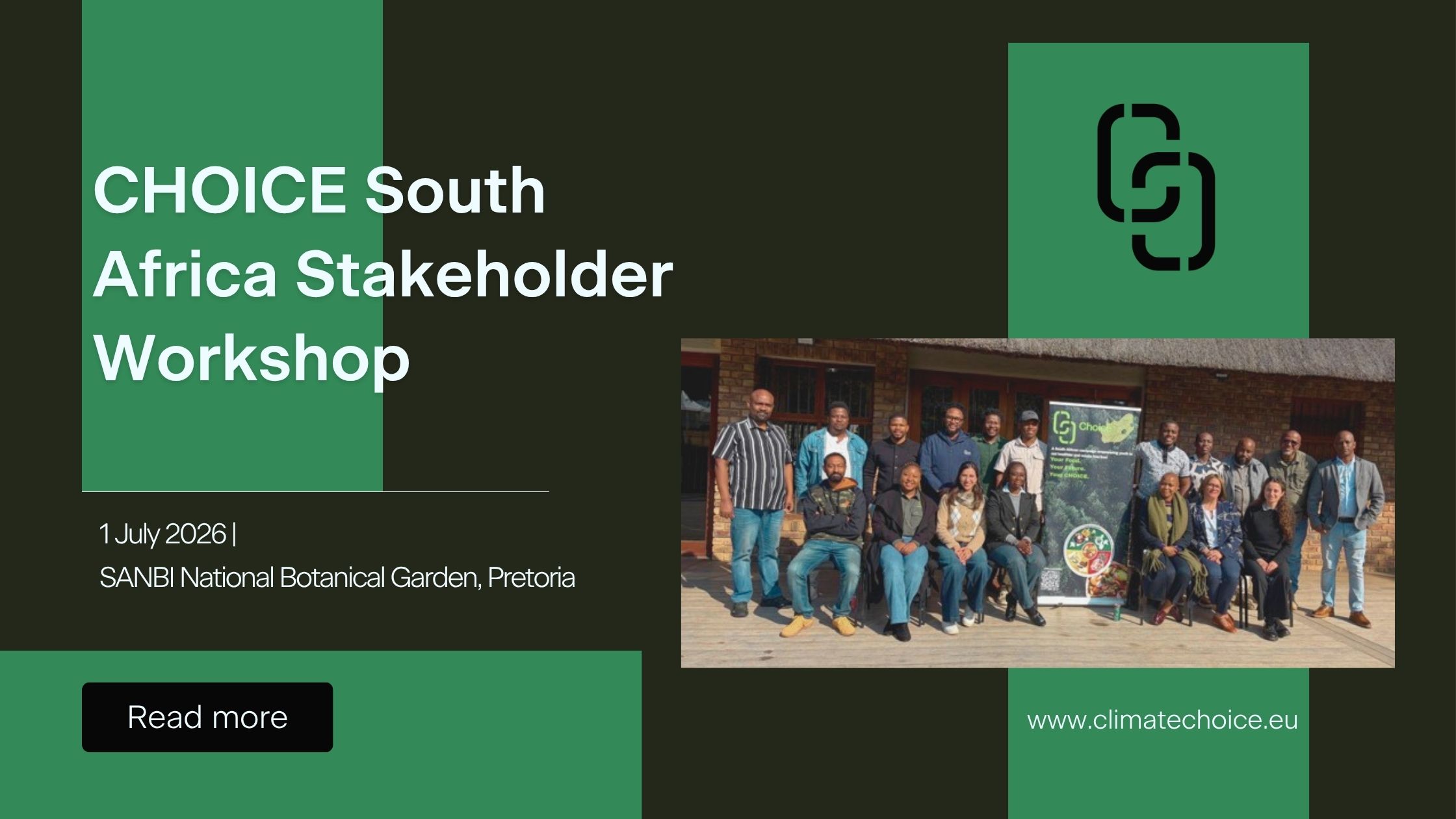
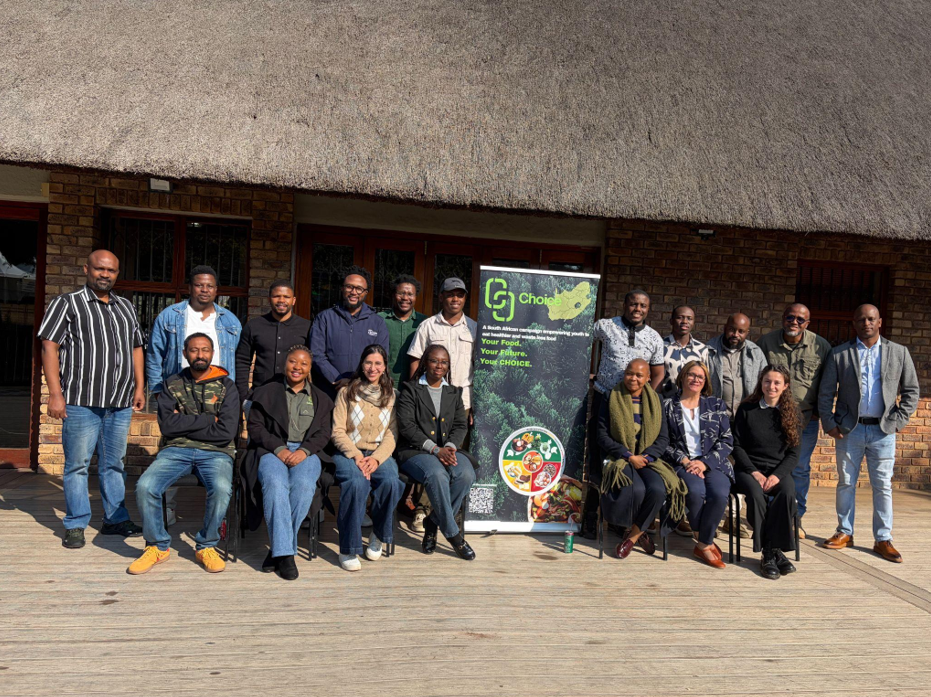
On 1 July 2026, representatives from government, academia, civil society and the private sector came together at the SANBI National Botanical Garden in Pretoria for the South African CHOICE Stakeholder Workshop.
The workshop created a space to share progress from the CHOICE South African pilot, discuss insights from pilot activities and explore possible food-system futures using the FABLE Calculator. Participants also reflected on the social, economic and environmental factors influencing food choices across the country.
Their contributions highlighted a clear message: meaningful food-system transformation must be informed by local realities, community knowledge and collaboration across sectors.
What could shape South Africa’s food future?
The workshop began with a discussion about the major changes likely to influence South Africa’s food system over the coming decades.
Participants emphasised the need to strengthen resilience to climate-related shocks, including events such as El Niño, and to improve contingency planning for possible disruptions to domestic food production and supply.
The future of indigenous foods was another important concern. Participants noted that many indigenous vegetables receive limited production support and are sometimes perceived as weeds rather than valuable foods and crops. Some expressed concern that their production and availability could decline significantly unless indigenous crops receive greater recognition and investment.
Other trends identified during the discussion included:
rising food prices alongside concerns about food quality;
a growing role for citizen and community activism in addressing food insecurity;
increasing use of precision agriculture and other advanced farming technologies; and
the need for stronger planning to respond to changes in food production, trade and accessibility.
These reflections demonstrated that the future of food cannot be understood through production alone. Affordability, culture, climate resilience, technology and public participation are all closely connected.
Bringing local knowledge into the CHOICE pilot
Following an introduction to the CHOICE project and its South African pilot activities, participants discussed the importance of grounding food-system interventions in local experience.
The conversation highlighted the limitations of purely top-down approaches. Policies or interventions may have positive objectives, but they can struggle to achieve their intended impact when implementation mechanisms, local capacities and the needs of affected communities are not fully considered.
Participants therefore reinforced the value of participatory processes that engage communities and stakeholders from the beginning. This approach can help ensure that proposed solutions are practical, trusted and relevant to the people expected to adopt or implement them.
Expanding participation and understanding local differences
Stakeholders proposed several ways to strengthen future South African pilot activities.
They recommended involving additional universities and extending engagement to more geographical areas. Comparing food-consumption patterns between provinces could also help the project better understand regional differences in food choices.
Education was repeatedly identified as a priority. Participants suggested placing greater emphasis on helping children develop healthy and sustainable eating habits from an early age.
Early education could support long-term change by building food knowledge before less healthy habits become firmly established.
Making campaigns relevant to communities
Stakeholders encouraged CHOICE to make campaign messages more practical and relatable, particularly for young people. They recommended working with existing community organisations to strengthen trust and local ownership.
Other suggestions included involving the hospitality sector in food-waste initiatives, exploring ways to make fruit and vegetables more affordable, and developing locally relevant dietary guidance for young people. Participants also highlighted limited access to indigenous foods in urban areas and discussed food-preservation methods, such as dehydrating surplus produce, as a way to reduce waste.
Understanding behaviour change
Participants noted that food-related behaviour change often follows a pathway:
Information → Perception → Behaviour → Market response
However, this process is rarely straightforward. Misinformation was identified as a significant barrier, while affordability and access were recurring concerns throughout the workshop.
Exploring scenarios with the FABLE Calculator
Participants used the FABLE Calculator to explore a scenario involving the partial replacement of maize with sorghum and millet.
The discussion focused on whether a 5% substitution would be realistic, which alternative crop should be prioritised, and how maize used for animal feed should be reflected in the scenario. Participants also considered the limitations that should be communicated when interpreting the results.
The session showed how stakeholder knowledge can help test model assumptions and identify local barriers. Sweet potatoes were also highlighted as an underused crop with potential, while questions were raised about the use of agrochemicals on indigenous crops.
From discussion to action
Participants recommended:
Expanding the visibility and reach of the CHOICE project to engage a broader range of stakeholders.
Strengthening collaboration with community organisations and existing initiatives.
Improving support for indigenous foods and crops throughout the food system, from production to urban accessibility.
Continuing to prioritise education and behaviour change, particularly among children and youth.
Exploring practical, locally relevant interventions that make healthy and sustainable food choices more accessible and affordable.
Looking ahead
The workshop provided a valuable platform for knowledge exchange and collaborative reflection on the future of South Africa’s food system. Stakeholders demonstrated strong interest in the CHOICE project and contributed a wide range of practical insights that will help strengthen future project activities, including campaign design, stakeholder engagement, and scenario development within the FABLE Calculator.
The interactive ‘2050 is Now’ serious game using the FABLE Calculator was particularly well received, with participants noting that it highlighted how siloed decision-making can contribute to many of the challenges facing food systems today. The exercise reinforced the importance of systems thinking, cross-sector communication, and considering the wider consequences of policy and management decisions. Together with the workshop discussions, this underscored the value of participatory, locally grounded approaches for identifying integrated pathways towards healthier, more sustainable, and resilient food systems in South Africa.
Want to explore this topic further? Read the FABLE Consortium’s article, “Rediscovering Indigenous Foods in South Africa,” to learn more about the role of indigenous and underutilised foods in supporting healthier, more sustainable and climate-resilient food systems.