On April 30, 2026, the CHOICE project was presented through an experiential environmental education workshop at the 1st Second Chance School of Larissa, Greece. The activity took place as part of the course “Environmental Education” of the Department of Environment, University of Thessaly, taught by Dr. Ilias Karachalios.
The educational visit brought together approximately 20 participants, including university students from the Department of Environment and adult learners from the first cycle of the 1st Second Chance School of Larissa. The workshop was held from 17:00 to 20:00 at the school facilities, hosted at the 5th Lyceum of Larissa.
The activity aimed to translate key CHOICE concepts into an educational setting, helping participants explore the links between food choices, food waste, climate change, cost, health, and everyday decision-making.
Bringing CHOICE into Environmental Education
The workshop, titled “Bringing CHOICE into Environmental Education: a pilot experiential intervention on sustainable food choices and food waste with university students and adult learners in Greece”, introduced CHOICE’s approach to climate-conscious choices in the food system through participatory and experiential learning methods.
CHOICE aims to support demand-side climate action by connecting Integrated Assessment Models, behavioural change, stakeholder engagement, digital tools, data storytelling, and green marketing campaigns. This educational activity adapted these ideas into a practical learning experience for university students and adult learners.
Rather than presenting sustainability as a purely technical or individual issue, the workshop encouraged participants to critically discuss the social, economic, behavioural, and environmental dimensions of sustainable food choices.
Experiential Learning for Food Sustainability
During the workshop, participants engaged in a sequence of interactive activities designed to stimulate reflection and dialogue.
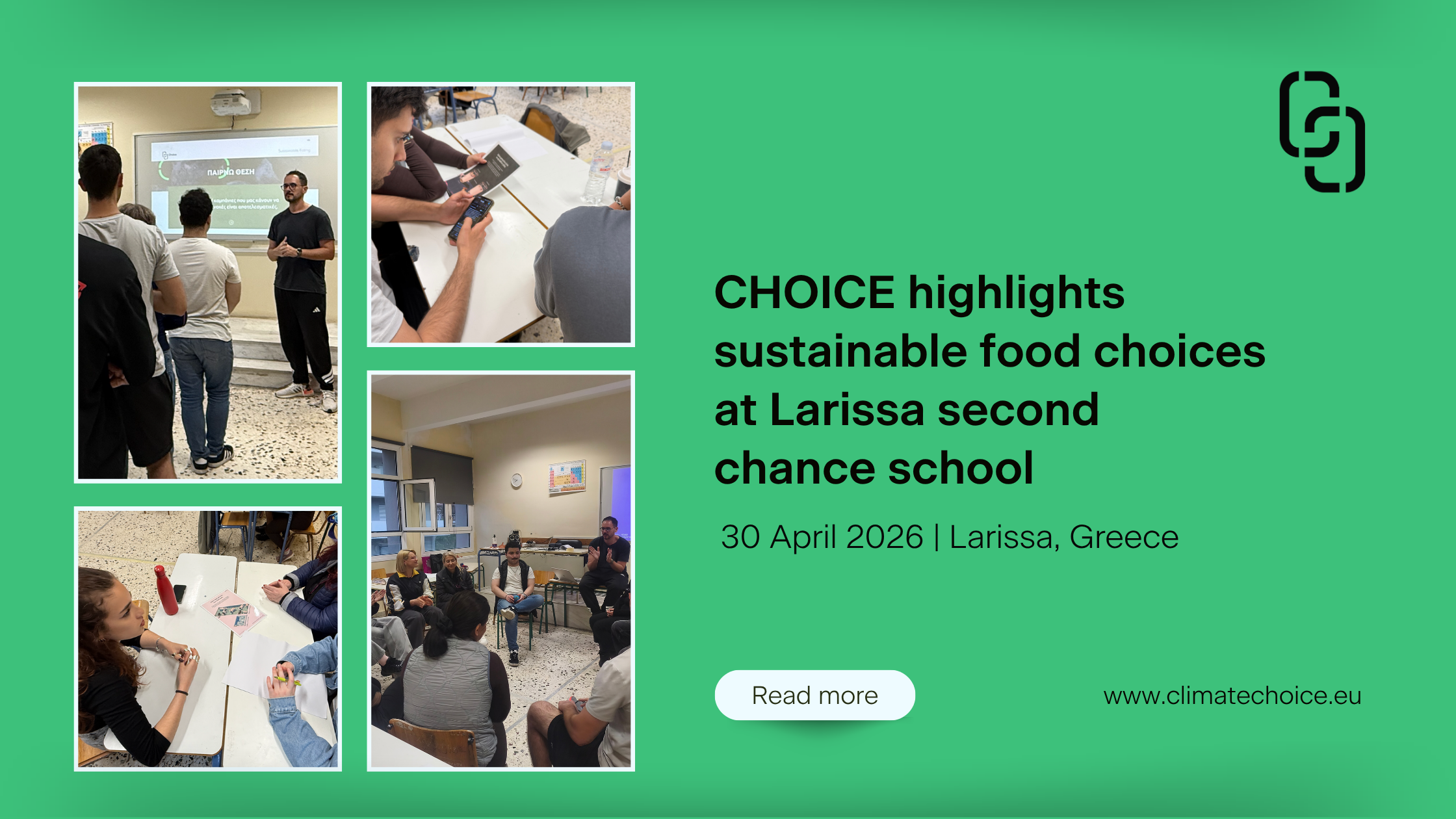
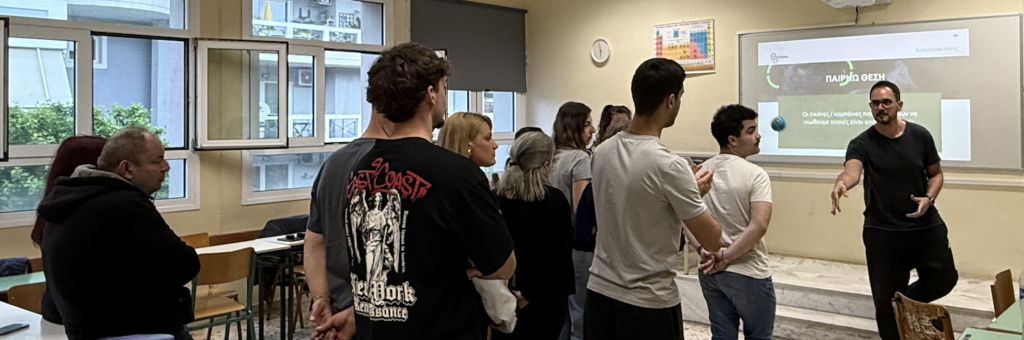
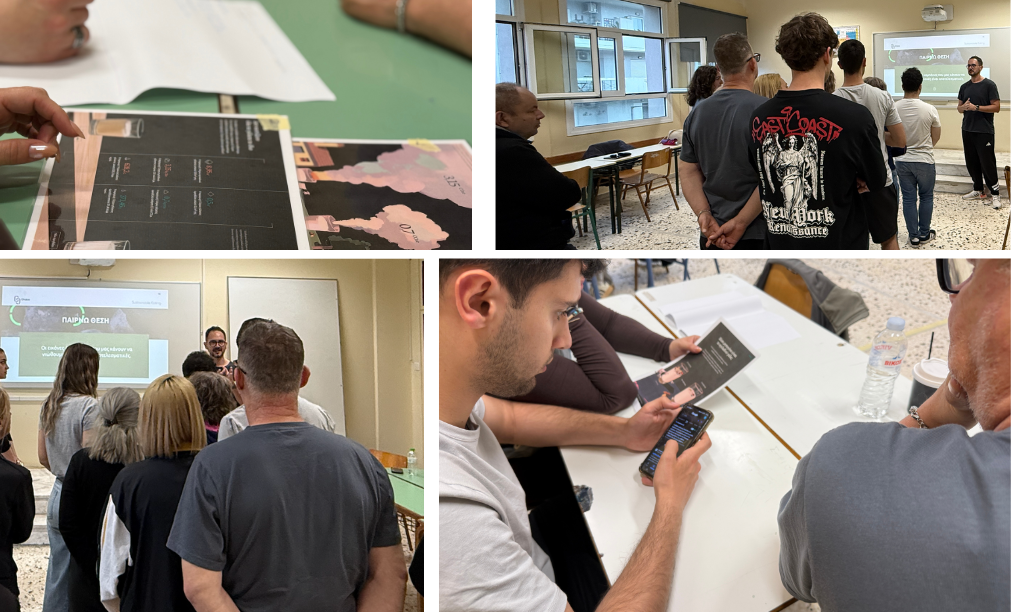
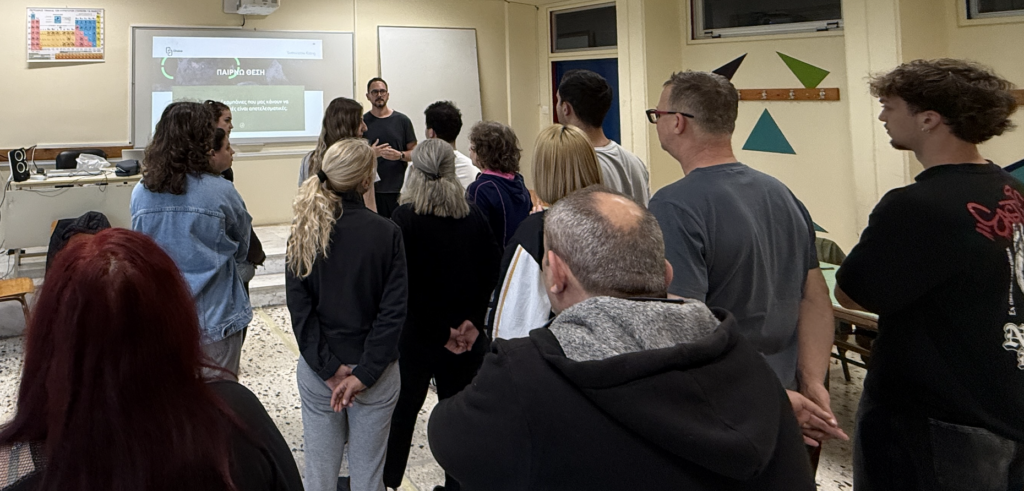
One of the interactive exercises, “Take a Stand”, invited participants to physically position themselves in the room according to their level of agreement or disagreement with provocative statements on sustainable diets, consumer responsibility, food waste, climate action, and the role of education. This method created space for dialogue, disagreement, and critical reflection.
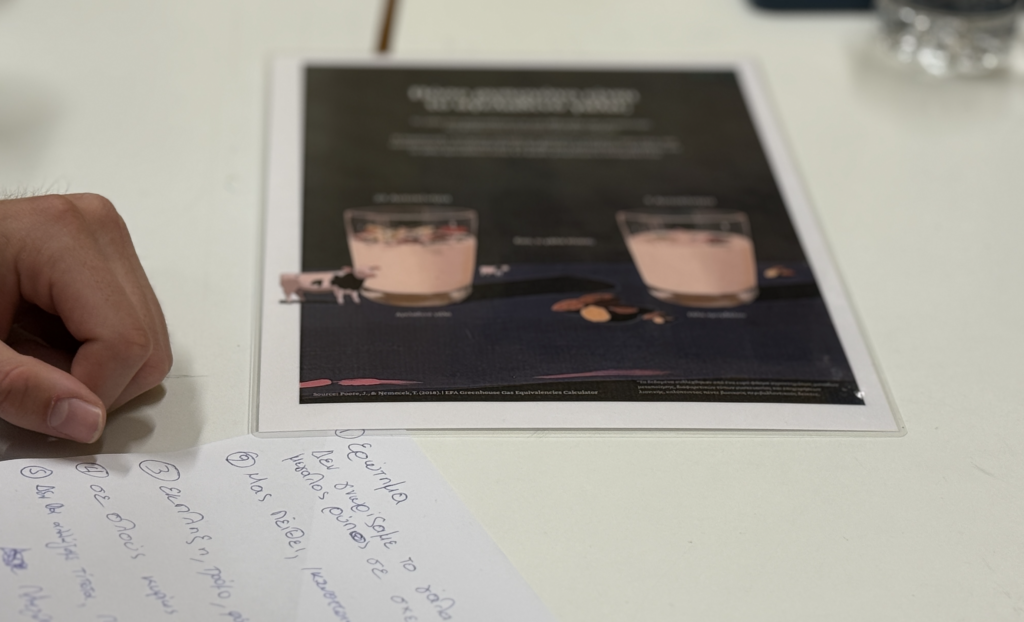
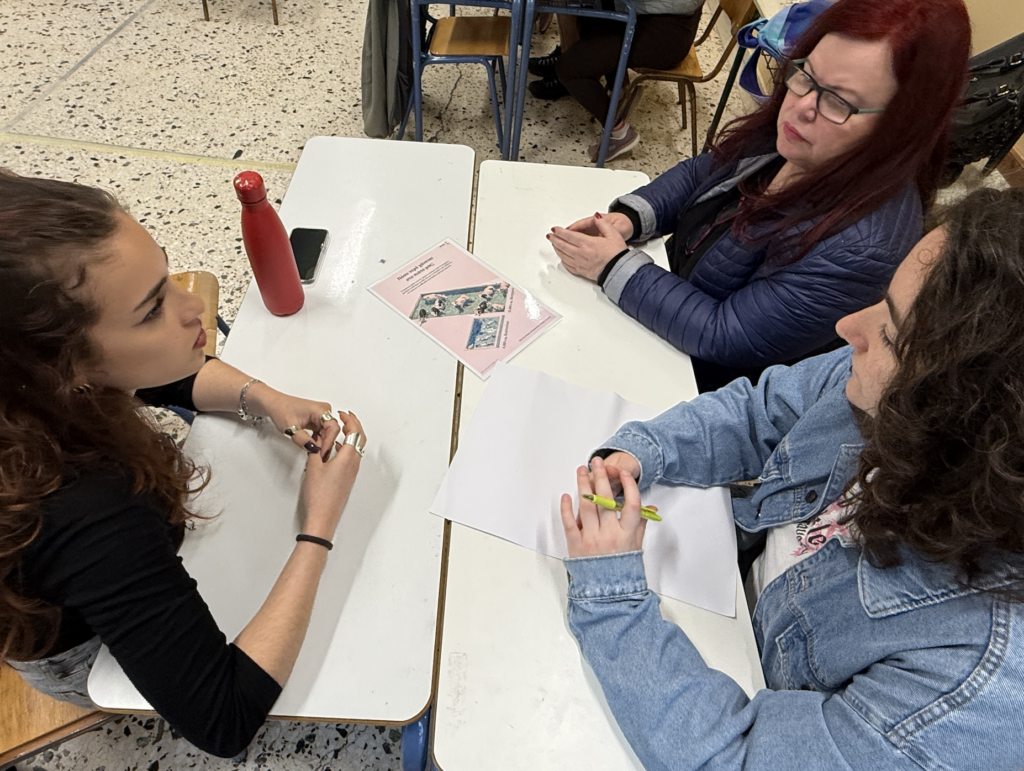
In the main part of the workshop, participants worked in small groups with selected visual communication materials and CHOICE-related campaign messages. They discussed how visual campaigns can communicate complex food sustainability issues, what emotions they trigger, and whether they can encourage awareness, reflection, and more climate-conscious everyday choices.
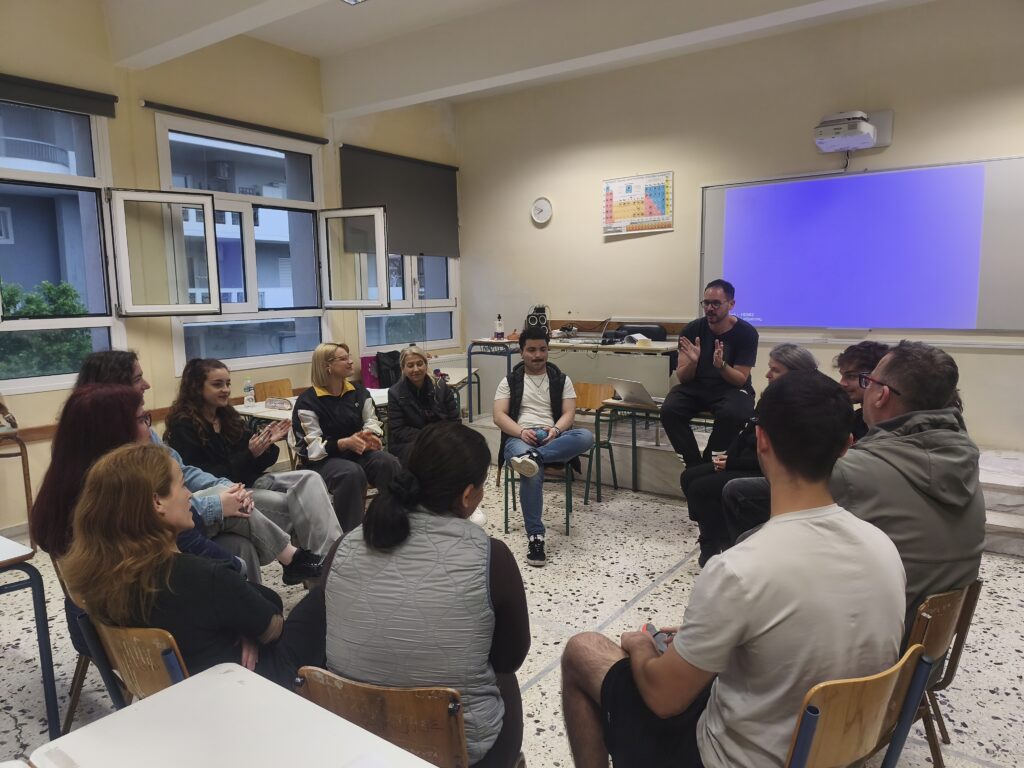
The activity concluded with a reflection session on realistic everyday actions that individuals and communities can take to reduce food waste and make more sustainable food choices.
Connecting CHOICE, Adult Learning, and Behavioural Change
This workshop was particularly relevant for CHOICE because it demonstrated how project concepts and campaign materials can be transferred into environmental education and adult learning contexts.
The activity showed that sustainable food choices cannot be addressed only as a matter of personal responsibility. Participants discussed the importance of cost, access, habits, information, social norms, and broader food system conditions. In this way, the workshop supported a more critical and realistic understanding of food-related climate action.
For the CHOICE project, this type of educational activity contributes to the wider objective of increasing outreach to citizens, communities, and educational actors. It also demonstrates how experiential learning can support awareness, reflection, and behavioural intention around sustainable food systems.
Strengthening Collaboration between Universities and Adult Education
The visit also highlighted the value of collaboration between higher education and adult education institutions. By bringing together university students and adult learners, the workshop created a shared learning space where different experiences, perspectives, and everyday realities could be discussed.
The activity underlined the potential of environmental education to move beyond classroom-based instruction and engage learners in participatory, real-life discussions about sustainability.
Dr. Ilias Karachalios emphasized that environmental education becomes more meaningful when it is connected with everyday choices, social realities, and practical dilemmas. Food choices and food waste provide a powerful entry point for this type of learning, because they are directly connected with daily life, household practices, economic constraints, and climate action.
Through this educational intervention, CHOICE strengthened its outreach in Greece and showcased how its concepts, tools, and communication approaches can inspire learning activities that support climate-conscious choices in the food system.
Interested in exploring the workshop material? You can view the presentation used during the session (in Greek) here.

Leave a Reply