CHOICE Webinar Explores Interactive Tools for Climate-Conscious Food System Transformation

Bringing Integrated Assessment Models Closer to People and Decisions

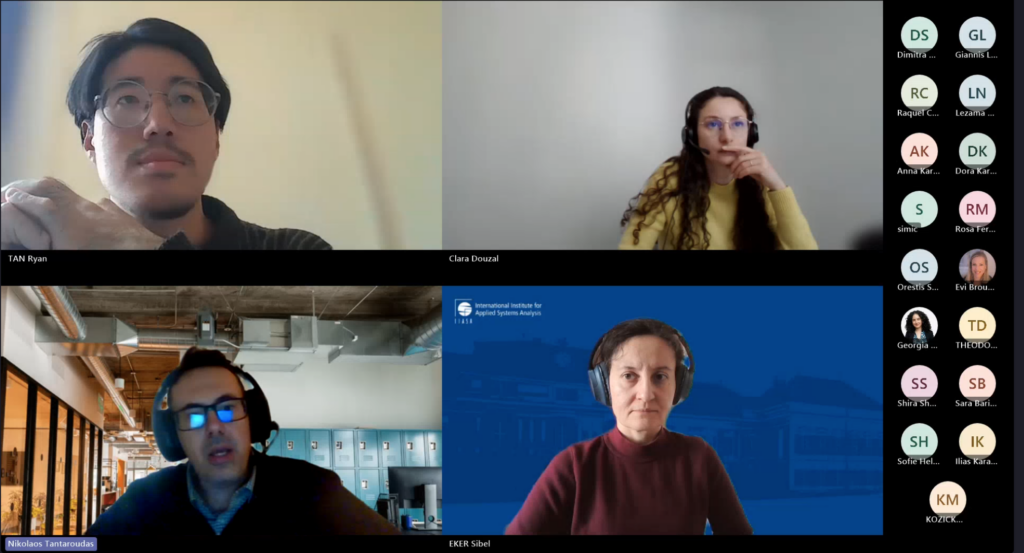
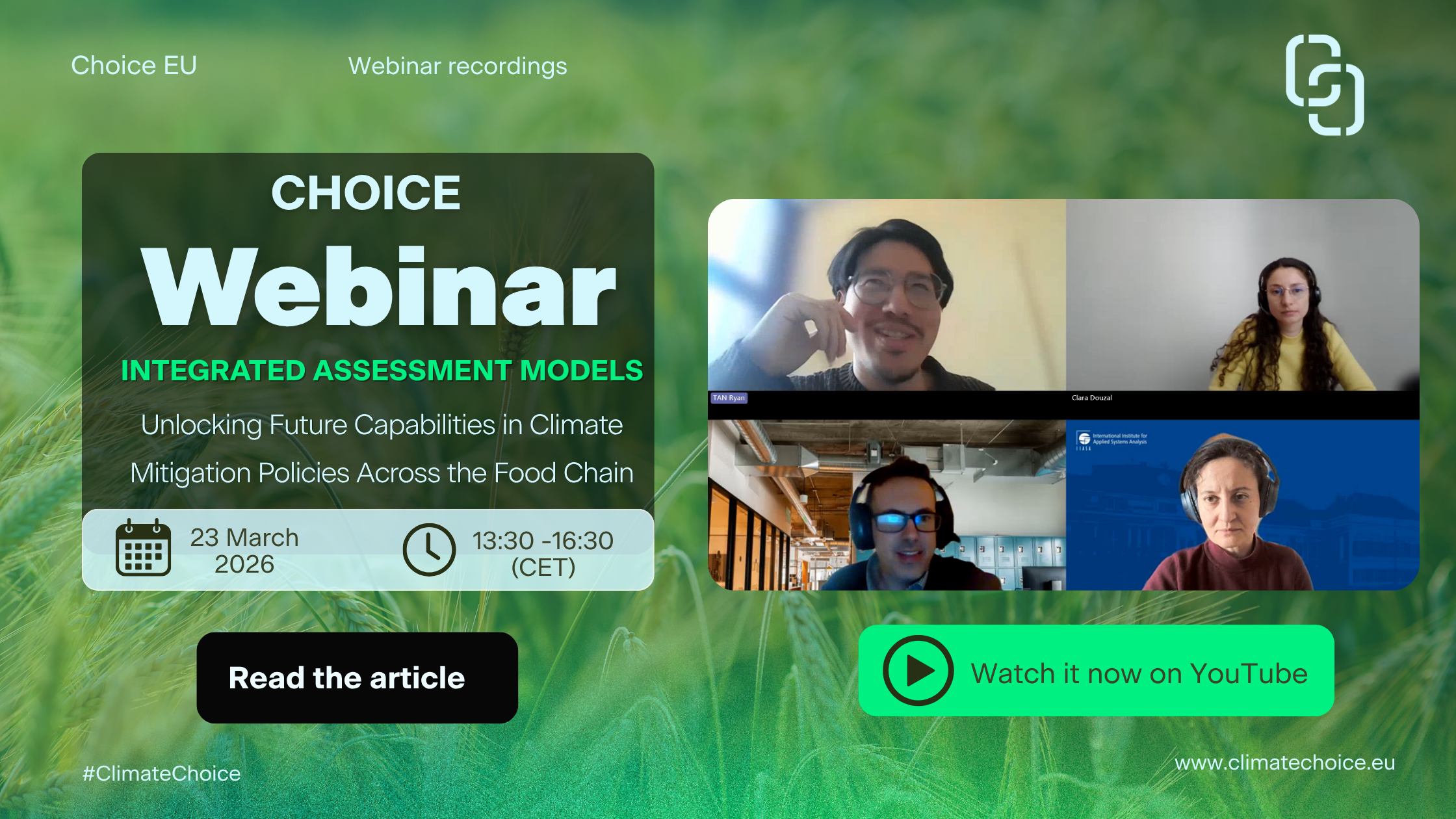
On 23 March 2026, the CHOICE project hosted an online webinar presenting two interactive simulation environments designed to make two Integrated Assessment Models (IAMs) more accessible and meaningful for real-world use: the FELiX Integrated Simulation Environment (ISE) and the FABLE Calculator ISE.

The session, organised by LIBRA and coordinated by Dr Nikolaos Tantaroudas (ICCS), brought together experts from the International Institute for Applied Systems Analysis (IIASA) and the Sustainable Development Solutions Network (SDSN), including Sibel Eker and Ryan Yi Wei Tan (IIASA) and Clara Douzal (SDSN), who guided participants through the tools, their underlying models, and their practical applications.

Structured across two main sessions followed by an interactive discussion, the webinar combined conceptual explanations with live demonstrations and hands-on exercises, enabling participants to actively explore food system scenarios and their implications for sustainability outcomes.

The FELiX ISE: Understanding the Impact of Everyday Choices

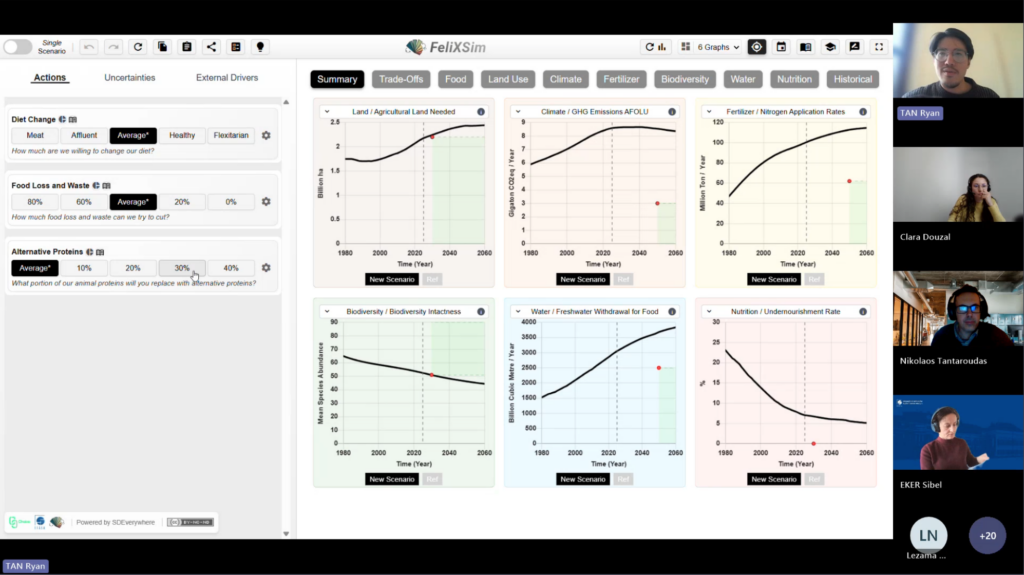
The first session, led by Ryan Yi Wei Tan (IIASA), introduced the FELiX model’s Integrated Simulation Environment and demonstrated how it can be used to explore scenarios for the food sector.

FELiX enables users to simulate changes in dietary patterns, food loss and waste, and the adoption of alternative proteins, and to observe how these shifts affect key sustainability dimensions. A central idea presented during the session was to consider what would happen if global populations adopted similar behaviours—highlighting how individual choices can scale to system-wide impacts.

The tool brings together six interconnected dimensions: land use, climate, fertiliser use, biodiversity, water use, and nutrition. By presenting these dimensions together, FELiX illustrates the complexity of food systems, where environmental and social processes are closely interlinked.

Participants were invited to build their own scenario using the tool’s built-in survey, review the results, select one or two sustainability indicators, and explore the system views to understand why their choices led to those outcomes.

A key takeaway from the FELiX session was the role of behavioural change as part of a wider transformation. Changes in consumption patterns, such as shifting diets, reducing food waste, or adopting alternative proteins,can make a significant contribution to reducing environmental pressures. At the same time, the discussion highlighted that these changes operate alongside technological developments, policy frameworks, and broader transformations within the food system.

The FABLE Calculator ISE: Exploring Pathways at the National Level

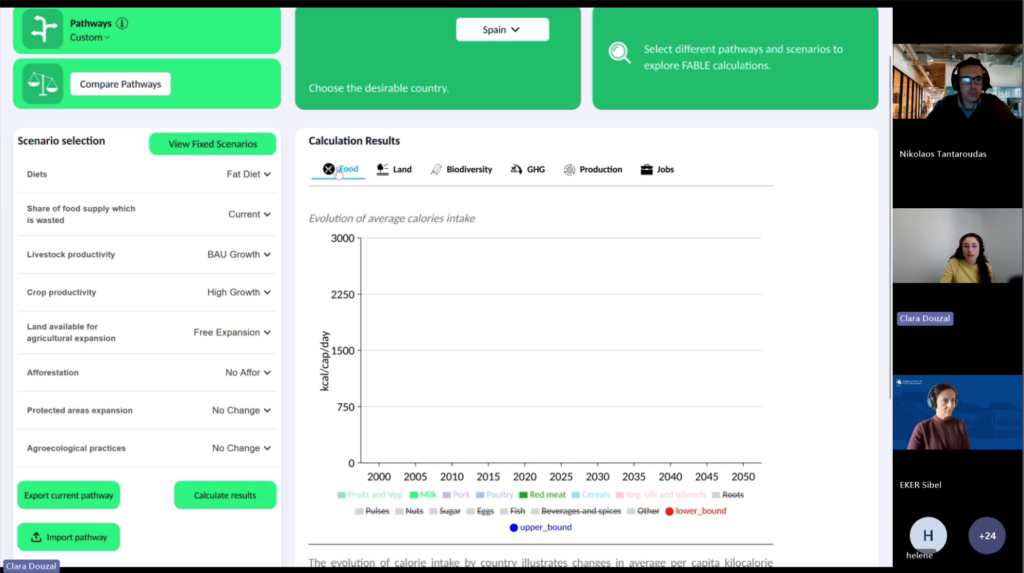
Following a short break, the second session was led by Clara Douzal (SDSN), who presented the FABLE Calculator ISE and demonstrated its application for exploring sustainable food system pathways at the national level.

The tool enables users to explore and compare scenario pathways for countries such as Greece, Spain, and South Africa, using both predefined pathways and user-defined assumptions—including dietary changes, productivity trends, and food waste reduction—to assess outcomes up to 2050.

By presenting results across multiple dimensions, including greenhouse gas emissions, land use and land-use change, biodiversity, nutrition, production costs, and agricultural employment, the FABLE Calculator provides a detailed view of how different assumptions affect food and land-use systems.

Designed as a web-based interface built on a detailed Excel-based model, the tool makes it easier for non-expert users to engage with complex modelling, supporting stakeholder discussions and country-level decision-making around sustainable food system transitions.

Supporting Engagement, Reflection, and Continuous Improvement

The webinar concluded with an evaluation and discussion session, where participants engaged in interactive feedback and shared reflections on both tools.

This exchange highlighted the importance of usability, transparency, and clarity in the development of interactive modelling environments. It also reinforced the value of continuous improvement, ensuring that tools remain both scientifically robust and accessible to diverse audiences.

Looking Ahead

The CHOICE webinar showed how interactive simulation environments can be used to test behavioural and policy assumptions in practice, allowing users to explore how different choices shape food system outcomes across multiple dimensions.

By linking individual actions and national pathways to measurable impacts, these tools provide a concrete way to examine trade-offs, compare scenarios, and support discussions on sustainable food system transitions.

Watch the webinar

Interesting to learn more? Watch the full recording of the CHOCE IAMs webinar here:
https://youtu.be/2L0XddHnqbY

Visit the CHOICE Interactive Simulation Environments at: 

Link to FeliX ISE:

https://climatechoice.github.io/felix/

https://tinyurl.com/felixsurvey2026

Link to FABLE Calculator ISE:

https://fable-ui.erra.gr/https://forms.office.com/e/H5kD215CKj


Leave a Reply

Your email address will not be published. Required fields are marked *