What changes when a model sees more of the system?
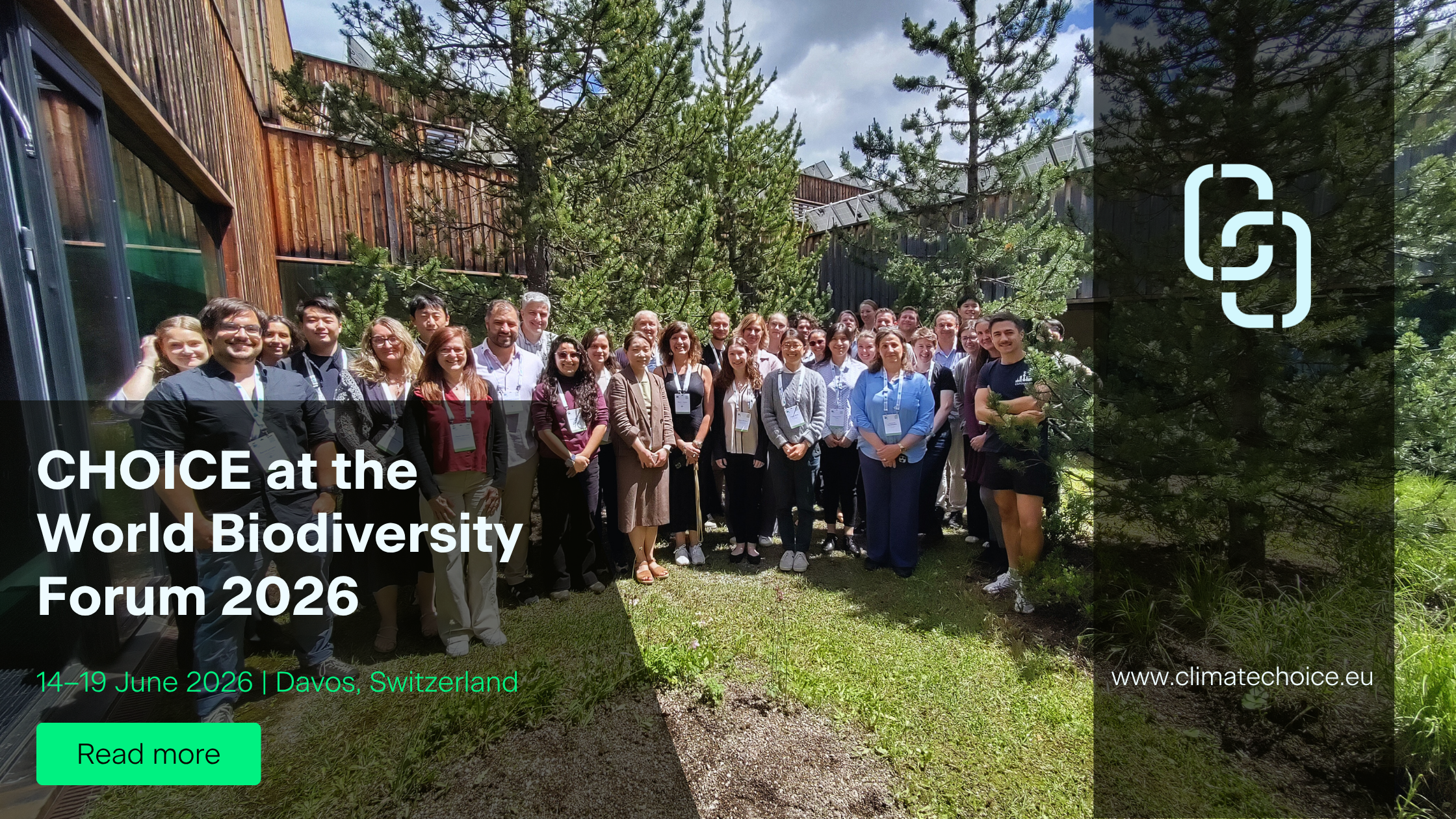
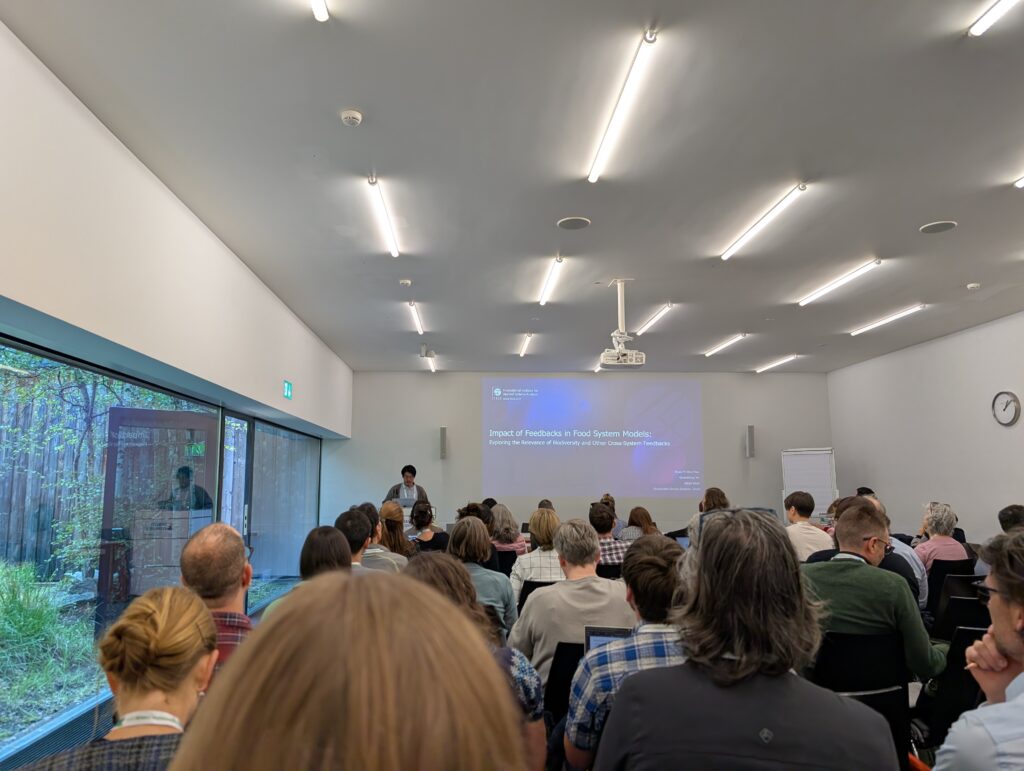
This was the question at the heart of Ryan Yi Wei Tan’s presentation at the World Biodiversity Forum 2026, where CHOICE joined the biodiversity community to explore how better modelling can support better decisions for climate, biodiversity, food systems, and society.
Representing IIASA and the CHOICE project, Ryan presented work on uncertainty in food system models using FeliX, a feedback-rich Integrated Assessment Model. His presentation focused on an important but often overlooked point: uncertainty does not only come from quantitative data or parameters, but it can also come from how models represent systems — and in particular which feedbacks they include or leave out.
With the presentation “Influence of Feedbacks in Food System Models: Exploring the Relevance of Biodiversity and Other Cross-System Feedbacks,” Ryan invited the audience to look beyond model outputs and ask a deeper question: what changes when the model itself sees more of the system? Developed with Quanliang Ye and Sibel Eker from IIASA’s Sustainable Service Systems group, the work highlighted why food system models need to better capture the feedbacks linking biodiversity, climate, water, land, food production, and society.
Why food systems are part of the biodiversity story
At first glance, food system modelling may seem like an unexpected topic for a biodiversity conference. But food systems are, in fact, one of the largest drivers of biodiversity loss. What we grow, how we produce it, how much land and water we use, how we manage fertilisers, and what people eat all shape biodiversity outcomes.
At the same time, biodiversity is not only affected by food systems — it can also influence them. Biodiversity supports food production through essential ecosystem services, namely pollination, where approximately three-quarters of global food crops depend at least in part on it.
This was one of the central messages of Ryan’s presentation: biodiversity should not only be seen as an endpoint of sustainability pathways. It is part of the system itself.
Feedbacks shape the future
The analysis explored feedbacks, such as the example of biodiversity feedback described above, that are represented inconsistently or sometimes omitted because different models were designed for different objectives and priorities. These include feedbacks related to biodiversity, climate, land-fertiliser intensification and water use. Their influence was tested across a wide range of policy-relevant social and environmental outcomes such as species abundance, AFOLU greenhouse gas emissions, freshwater withdrawal, agricultural land demand, nitrogen application, and caloric availability.
The results showed that different feedbacks become influential at different times. Some shape near-term outcomes more, while others accumulate and shape medium- to long-term outcomes. Interaction effects of multiple feedbacks are shown to be very influential for outcomes such as caloric availability and freshwater use, highlighting the need to consider cross-system interactions.
From uncertainty to better choices
The takeaway is clear: model structure matters.
The study does not suggest that existing models are “wrong”. Rather, models are built around specific objectives of interest, and their structure reflects those priorities. However, as modelling increasingly shifts toward interconnected sustainability challenges, representing key cross-system feedbacks becomes increasingly necessary and important – and we ought to reflect them better in our modelling frameworks to support more integrated and robust policies.
For CHOICE, this work reflects the project’s mission to make Integrated Assessment Models more transparent, useful, and inclusive by better representing behavioural change, actor heterogeneity, and the connections across food, agriculture, land use, climate, and biodiversity.
By helping us see more of the system, better models can support better choices for a more sustainable future.
Want to dive deeper? Explore the full presentation here.